
Ledebour's rhododendron
Rhododendron ledebourii Pojark.
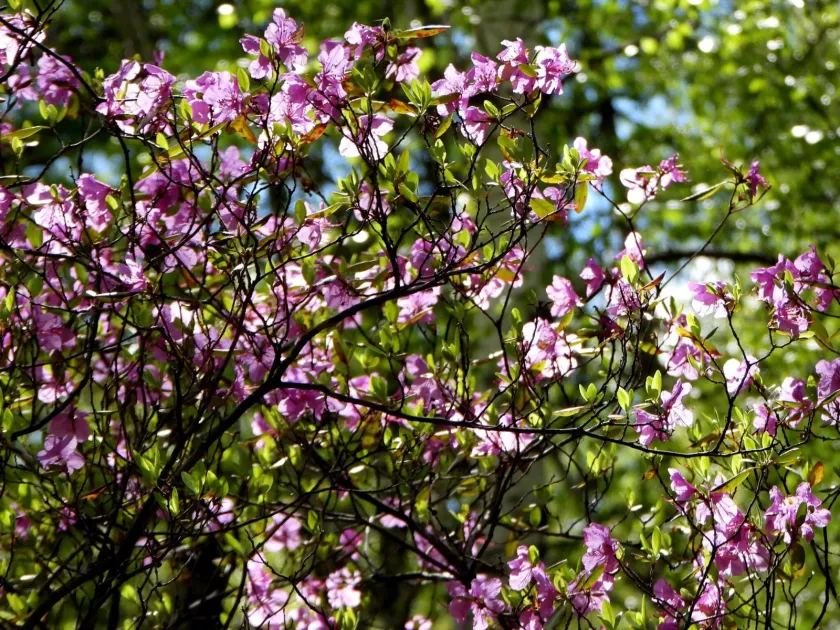
Description
Growing requirements
Ledebour's rhododendron (Rhododendron ledebourii) is a semi-evergreen shrub belonging to the Ericaceae family. Native to the Altai and Sayan mountain ranges, it is highly valued for its extreme cold hardiness and early flowering period.
The plant requires acidic soil conditions with a pH range between 4.5 and 5.5 to thrive. The substrate must be lightweight, porous, and rich in organic matter to ensure healthy root system development and proper drainage.
For optimal growth, this species prefers sheltered, semi-shaded locations protected from scorching direct sunlight and desiccating winds. It is an excellent choice for northern rock gardens and specialized landscapes that mimic its natural habitat.
Agrotechnical maintenance focuses on consistent moisture levels and acidic soil management. Mulching with pine needles or bark is essential to suppress weeds, retain soil moisture, and prevent the roots from overheating during the summer months.
Beyond its ornamental value, the species is recognized in traditional medicine for its essential oils and secondary metabolites. It remains a key focus for botanical study and cold-climate gardening due to its unique physiological adaptations.
Main diseases and pests
The primary threats to Ledebour's rhododendron include fungal pathogens such as Phytophthora root rot. This condition is almost always induced by improper water management, particularly waterlogged soil which leads to root asphyxiation.
The rhododendron lace bug is a common pest that feeds on the underside of leaves, causing chlorosis and silvering of the foliage. Early detection and the use of targeted insecticides are recommended to prevent significant damage.
Powdery mildew and various leaf spot fungi may appear if air circulation around the shrub is restricted. Regular pruning of dead or diseased branches helps improve ventilation and reduces the risk of spore development.
Spider mites are potential pests during periods of prolonged drought and high temperatures. Maintaining proper hydration and periodically misting the foliage can act as a deterrent to these insects.
Nutrient imbalances, particularly over-fertilization with nitrogen, can weaken the plant's natural defense mechanisms. It is recommended to use slow-release fertilizers specifically formulated for acid-loving ericaceous shrubs.