
Rhododendron degronianum
Rhododendron degronianum Carrière
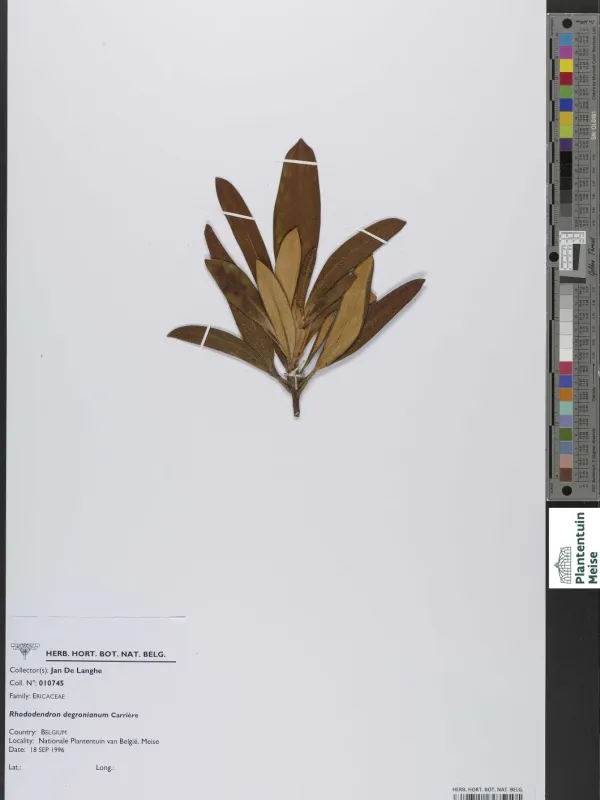
Description
Growing requirements
Rhododendron degronianum is a distinguished member of the Ericaceae family. This slow-growing, evergreen shrub is highly regarded for its compact growth habit and its ability to withstand colder temperatures compared to many other rhododendron species.
Originating from the mountainous regions of Japan, this plant is well-adapted to cool, humid environments. It serves as an excellent ornamental specimen for woodland gardens where the microclimate mimics its native habitat.
The plant requires well-drained, acidic soil rich in organic matter. A mixture of peat, pine bark, and sand is ideal to ensure the roots receive adequate oxygen while maintaining necessary moisture levels for optimal growth.
Placement is critical; Rhododendron degronianum thrives in partial shade. Direct, harsh sunlight can damage the leaves, while deep shade may reduce its flowering potential. Protection from drying winds is also essential throughout the year.
Cultural practices include regular watering with soft water and the application of ericaceous fertilizers. A thick layer of organic mulch, such as pine needles, should be maintained around the base to preserve moisture and suppress weeds.
Main diseases and pests
Phytophthora root rot is one of the most significant threats to this species, typically triggered by poorly drained soil or excessive moisture. Once established, the fungus can rapidly compromise the health of the entire plant.
Insect pests, most notably the rhododendron bug and spider mites, are common issues. These pests target the foliage, causing stippling and discolouration, which detracts from the shrub's aesthetic appeal.
Preventive maintenance includes proper airflow management and the removal of dead or decaying foliage from around the base. Applying systemic fungicides or miticides should be done only when specific symptoms are identified.
Monitoring for chlorosis is also vital; this condition occurs when soil pH rises, making iron unavailable to the plant. Maintaining the soil pH between 4.5 and 5.5 is crucial for ensuring vibrant, green foliage.
Consistent inspection during the growing season allows for early intervention. By keeping the plant stress-free through proper water and nutrient management, you significantly increase its natural resistance to common garden threats.