
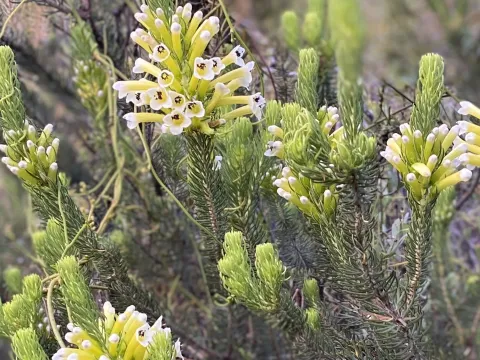
Erica pinea
Erica pinea
Erica pinea is a species of flowering plant belonging to the Ericaceae family, commonly known as the heather family. This shrub is native to the South African region, where it thrives in well-drained, nutrient-poor landscapes typical of the Cape Floristic Region.
What the section contains
Erica pinea
The plant is characterized by its distinct pine-like foliage, consisting of thin, needle-shaped leaves arranged along woody stems. The flowers are typically tubular, displaying soft hues and adding ornamental value to the plant throughout the growing season.
Successful cultivation requires highly acidic, well-draining soil. It is essential to ensure that the rooting medium does not retain excessive water, as the species is highly susceptible to root rot in waterlogged conditions.
Regarding climate, Erica pinea prefers regions with moderate temperatures. It requires a sunny position to encourage flowering, although it should be protected from intense heat and drying winds that can stress the plant's delicate vascular system.
In landscaping, this species is utilized for rock gardens and as a container plant. Its unique texture and elegant growth habit make it a desirable choice for gardeners aiming to establish low-maintenance, drought-tolerant, and acid-loving plant displays.
The most significant threat to Erica pinea is the presence of pathogenic soil fungi, such as Phytophthora, which flourish in poorly drained or overly saturated substrates.
Pests such as aphids often target new growth, causing deformity and stunted development. If left untreated, these infestations can severely compromise the plant's overall health and vigor.
Spider mites can also be problematic, particularly in dry environments. Their presence is often identified by the fine webbing they leave behind on the foliage, accompanied by general yellowing of the leaves.
Maintaining proper hygiene by cleaning tools and disposing of infected plant material is essential for disease management. Regular monitoring of the foliage helps detect early stages of pest infestations.
It is recommended to apply specialized fertilizers for Ericaceae to support balanced growth. Avoid nitrogen-heavy fertilizers, as they can encourage excessive vegetative growth that is more prone to pest attacks.