
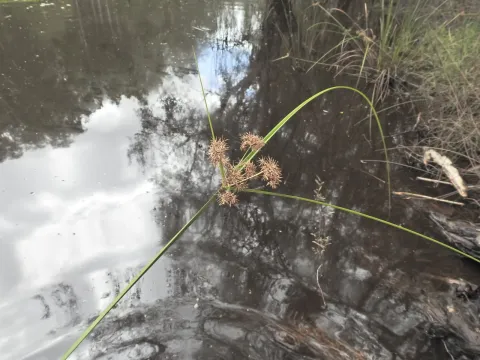
Gunn's sedge
Cyperus gunnii
Gunn's sedge (Cyperus gunnii) is a robust perennial herb belonging to the Cyperaceae family. Native to Australia, this plant thrives in wetlands and riparian habitats, showcasing the classic growth patterns typical of the genus Cyperus.
What the section contains
Gunn's sedge
Botanically, it is defined by its tall, sturdy, triangular stems that can reach heights of over one meter. The foliage is predominantly basal, and the terminal inflorescence displays the umbrella-like structure that makes it highly recognizable among other sedge species.
Cultivation of this species requires meticulous attention to soil moisture. As a semi-aquatic plant, it performs best in saturated soils or shallow water conditions, making it an ideal candidate for restoring wetlands or enhancing landscape water features.
Regarding climate requirements, the plant prefers temperate conditions with ample sunlight. While it can withstand moderate temperature fluctuations, it is best to protect it from extreme frost, which can damage the foliage and stunt subsequent growth cycles.
The soil profile should ideally be rich in organic matter. Although it can tolerate a variety of soil types, consistent moisture levels and good aeration are essential for preventing root rot while maintaining vigorous growth during the primary vegetation phase.
Harvesting Gunn's sedge is primarily aimed at procuring material for floristry, basketry, and ecological restoration projects. The harvest window typically occurs late in the season when the stems are mature and structurally sound.
Mechanical harvesting or manual cutting should be performed carefully at the base of the stems. Proper cutting techniques ensure that the plant's crown remains intact, allowing for rapid regeneration and sustainable yield in the following growing seasons.
Post-harvest management involves grading the stems based on their length and tensile strength. This ensures that the material meets the specific requirements for various artisanal applications, from weaving decorative mats to creating floral arrangements.
Drying the harvested material requires a controlled environment with consistent airflow. Avoiding direct sunlight during the drying process helps preserve the stem integrity and natural color, which are vital for the aesthetic quality of the final product.
By following established harvesting protocols, growers can ensure a high-quality supply of sedge material that is both durable and versatile, supporting both commercial interests and environmental conservation efforts.