
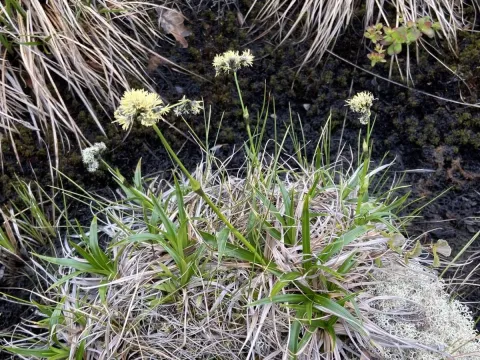
Maximowicz's bulrush
Scirpus maximowiczii
Maximowicz's bulrush (Scirpus maximowiczii) is a perennial herbaceous plant belonging to the Cyperaceae family. It is a highly specialized hydrophyte, primarily adapted to wetlands, marshes, and the shallow margins of lakes or rivers, where it spreads via a robust rhizome system.
What the section contains
Maximowicz's bulrush
The most effective propagation method for agricultural purposes is vegetative division of rhizomes. Planting is typically scheduled for early spring, once the water temperature consistently stays above 10 degrees Celsius, allowing for rapid root establishment before the peak summer heat.
When establishing a plantation, rhizome sections should be planted at a depth of 5 to 10 centimeters in the silty or organic-rich bottom substrate. Ensuring a proper density, typically 4–6 plants per square meter, helps establish a stable canopy that minimizes weed competition early on.
For seed-based propagation, which is less common but useful for genetic diversity, sowing should take place in greenhouse conditions during late winter. Seedlings are then transplanted into the field after the danger of frost has passed, ensuring they are placed in adequately moist environments.
Proper field planning includes establishing water management infrastructure to control the depth of flooding. Consistent water coverage during the initial growth phase is critical for the long-term survival and vigor of the newly established bulrush stands.
As a hydrophyte, Maximowicz's bulrush requires constant moisture and thrives best in standing or slow-moving water with a depth of 10 to 50 centimeters. While it can withstand short periods of drawdown, prolonged drought significantly reduces biomass production.
High levels of solar radiation are essential for the plant to achieve maximum height and stem structural integrity. Shaded environments inhibit photosynthesis and result in thin, brittle stems that are unsuitable for industrial use.
The ideal substrate is composed of organic-rich silt, peat, or heavy clay soils with a pH ranging from 5.5 to 7.0. These soils provide the necessary nutrients and anchorage to support the large biomass of the plant during its active growing season.
The species is well-adapted to temperate climates, exhibiting a high level of winter hardiness. The rhizomes remain viable even if the water body freezes solid, provided they remain in a moist or saturated environment throughout the winter months.
While the plant is highly efficient at nutrient uptake from aquatic environments, supplementary fertilization is sometimes used in artificial systems to boost yield. Nitrogen-rich applications during the early vegetative phase can significantly enhance the final harvest weight.
The biomass yield of Maximowicz's bulrush is impressive, often reaching 10 to 15 dry metric tons per hectare under optimal management. The yield depends heavily on the duration of the growing season and the nutrient content of the aquatic environment.
Productivity is directly linked to stem density and maturity. By thinning the stands every few years, farmers can stimulate new growth and prevent the overcrowding that often leads to reduced stem diameter and lower quality fiber.
Studies indicate that growth rates are significantly higher in systems where water turnover is present, as this supplies fresh nutrients to the root zone. This makes the crop an excellent candidate for integrated aquatic farming and wastewater treatment systems.
Fiber quality, which is crucial for the paper and construction industries, is highest in plants harvested at the end of the second or third growing season. Consistency in yield is maintained by preventing the accumulation of dead plant matter, which can otherwise acidify the water.
Overall economic returns are influenced by the ease of mechanical harvesting and the local demand for natural raw materials. Maximowicz's bulrush is increasingly recognized for its role in sustainable fiber production and energy crop cultivation.
The most significant threats to Maximowicz's bulrush are pathogens related to water quality, particularly anaerobic conditions that lead to rhizome rot. Maintaining adequate water circulation is the primary defense against these fungal and bacterial infections.
Insect pests, including specific types of stem borers and leaf beetles, can cause localized damage. While usually not lethal to the entire plantation, severe infestations can reduce the quality of the harvestable stalks by introducing secondary pathogens.
Large mammals such as deer or wild boars can cause mechanical damage by trampling the stands, especially along the edges of the water. Effective fencing is often required to protect the crop in semi-wild environments.
Disease management is best handled through sanitation and environmental control rather than chemical pesticides. Removing infected stalks and maintaining healthy water levels are sufficient to keep disease pressure within manageable thresholds.
Preventative monitoring for signs of stress, such as leaf discoloration or soft stem tissue, allows for early intervention. Proactive management of the aquatic ecosystem is the most sustainable approach to maintaining a healthy and productive bulrush crop.
Harvesting usually occurs in late autumn or early winter, once the plants have entered dormancy and the moisture content in the stalks has naturally decreased. This timing ensures higher quality dry biomass and easier processing.
Mechanical harvesting utilizes specialized amphibious mowers designed to operate in shallow water. The stalks are cut as close to the substrate as possible to optimize the total recovery of the biomass available in the stand.
After cutting, the bulrush is gathered into bundles and left to air-dry in a protected, well-ventilated area. Drying is essential to reach a stable moisture content of below 20%, which prevents the development of mold during storage.
Storage requires a dry, covered space with excellent airflow. Proper ventilation is vital to maintain the structural integrity of the stems, especially if they are intended for use in building materials or high-quality fiber products.
Modern logistics favor the baling of dried bulrush for efficient transportation to processing facilities. When managed correctly, the harvesting process provides a sustainable and renewable resource that can be collected annually for many years from a single site.