
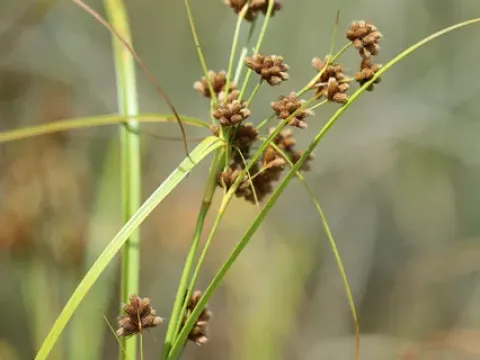
Mitsukuri bulrush
Scirpus mitsukurianus
Sowing Mitsukuri bulrush (Scirpus mitsukurianus) is best performed in early spring once soil temperatures reach 10–12 degrees Celsius. The seeds require stratification, which is why commercial growers often prefer utilizing seedlings propagated in greenhouse environments for consistent results.
What the section contains
Mitsukuri bulrush
The optimal planting time for seedlings into open fields is during periods of stable warmth, ensuring the absence of late frost risks. A planting pattern with 30–40 centimeters between plants is recommended to ensure proper density and rapid coverage of the assigned area.
When sowing seeds directly, maintaining high substrate moisture is crucial. Seedlings typically emerge within two to three weeks under consistent moisture. Sowing depth should not exceed 0.5–1 centimeter, as the seeds are light-sensitive and need sufficient exposure to germinate successfully.
In natural habitats, this culture reproduces vegetatively via rhizome expansion, a method frequently used to establish new plantations. Dividing 3–4-year-old clumps ensures robust root establishment and higher survival rates in the months following transplantation.
Site preparation involves clearing existing weeds and establishing a controlled hydrological system. Consistent water supply during the initial stages of development is a critical factor for successful root system establishment and subsequent vigorous growth of the aerial part of the plant.
Mitsukuri bulrush belongs to the Cyperaceae family and is a typical hydrophyte, demanding constant soil moisture or flooding at depths of 5 to 20 centimeters. It is well-adapted to the coastal zones of water bodies or specially irrigated agricultural fields.
The crop thrives in fertile, silty, or peaty soils with neutral to slightly acidic pH levels. High organic matter content is essential for stimulating rapid biomass production, which is a key performance indicator for the commercial success of the plantation.
This plant is light-loving and requires significant sunlight. Shading can lead to slower development of stems and reduced structural strength, negatively impacting the quality of the raw material. Open areas sheltered from strong winds are ideal for industrial cultivation.
Mitsukuri bulrush has moderate temperature requirements but needs a long warm growing season to achieve maximum stem heights exceeding 1.5 meters. The species is resilient to the temperature fluctuations commonly found in temperate climate zones.
Agrotechnical maintenance focuses on managing the hydrological regime. Drying out the soil is critical, as it leads to turgor loss and potential plant death. Additionally, monitoring mineral salt levels is necessary to prevent environmental stress that can suppress plant growth.
The biomass yield of Mitsukuri bulrush is highly dependent on planting density and nutrient availability. Under intensive management, a plantation can produce 10–15 tons of air-dry matter per hectare, which meets the industrial requirements for fiber and raw materials.
Peak productivity is generally achieved in the second or third year after planting once the root system has fully occupied the soil volume. During this period, the plants show the most active tillering, allowing for sustainable annual harvesting without degrading the plantation's overall health.
The accumulation of plant residues can potentially acidify the growing environment over time. Periodic rejuvenation of the plantation by thinning or cutting back rhizomes is essential to maintain high yield levels over a decade-long productive lifespan.
Nitrogen fertilization, applied as a liquid directly into the water, can increase biomass output by 20–30 percent. Effective fertilizer management promotes the development of stronger and taller stems, which are highly valued in industrial processing applications.
Yield estimation is conducted at the stage of technical maturity when stem fiber quality is optimal. Harvesting is performed using specialized machinery or manual labor, depending on the scale of the plantation and the specific terrain features of the growing site.
The primary diseases affecting Mitsukuri bulrush are fungal infections caused by stagnant water and poor air circulation. Rust fungi can cause premature drying of leaves and stems, significantly degrading the quality of the harvested fiber and overall plant vitality.
Insect larvae that feed on soft stem tissues represent the most significant pest threat. Damage to the stem structure allows pathogens to enter, which can lead to localized lodging and the eventual death of parts of the plantation if not addressed promptly.
To prevent disease outbreaks, crop rotation and thinning of overly dense stands are recommended to improve aeration. Maintaining a balanced plant density is a proven strategy for keeping the phytosanitary condition of the plantation at a high level.
In cases of significant pest outbreaks, such as marsh weevils, biological control methods are preferred. Chemical treatments, if necessary, require extreme caution as they disperse rapidly in aquatic ecosystems, potentially causing unintended damage to the environment.
Effective defense also includes the use of disease-free planting material. Strict quality control and quarantine measures for new stock arrivals are essential to minimize the risk of introducing invasive pathogens into existing commercial plantations.
The harvest of Mitsukuri bulrush occurs in late summer or early autumn when the stems have accumulated sufficient lignin and other structural compounds. Harvesting before the start of the rainy season is vital to maintain high material quality and ease the drying process.
Specialized mowers designed for wetland operations are used to ensure a clean cut at the required height. Proper cutting height is essential to prevent water from entering the stumps, which could otherwise lead to root rot and jeopardize the following season's yield.
After harvesting, the raw material is dried in field conditions or in specialized drying units. Rapid moisture reduction is crucial to prevent mold growth and preserve the physical integrity of the fibers for manufacturing purposes.
Storage must take place in well-ventilated structures protected from rain and direct sunlight. Proper storage conditions allow the material to retain its chemical and physical properties until it is transported to processing facilities.
Harvesting schedules must be tightly integrated with processing timelines to minimize storage and transportation costs. A well-organized harvest ensures maximum utilization of the crop for textile, building, or industrial manufacturing needs.