
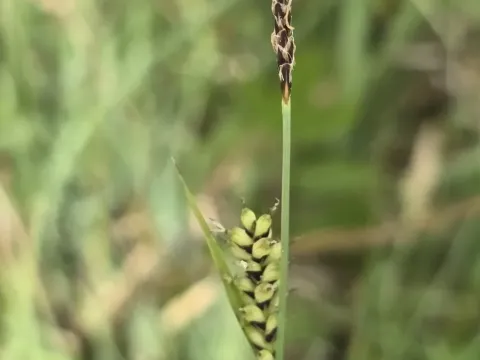
Millet sedge
Carex panicea
Millet sedge (Carex panicea) is a perennial herbaceous plant belonging to the Cyperaceae family. It is widely recognized for its adaptation to wetland environments, serving as an important structural component of meadows and riparian zones.
What the section contains
Millet sedge
The natural distribution of this species spans across the temperate regions of Europe, Asia, and North America. It is typically found in habitats characterized by persistent high soil moisture, including fens, damp grasslands, and wet heathlands.
Botanically, the plant features elongated creeping rhizomes, which facilitate vegetative spread and the formation of patches. The leaves exhibit a characteristic glaucous or bluish-green hue, helping to distinguish it from other sedge species in the field.
The crop thrives in soils with high water-holding capacity and generally acidic to neutral pH levels. It exhibits a remarkable tolerance to waterlogging, making it a reliable indicator of poorly drained or anaerobic soil conditions.
In agricultural practice, millet sedge is utilized as a source of roughage in extensive livestock systems. While its palatability is lower compared to specialized fodder grasses, it provides a stable ground cover in areas unsuitable for intensive tillage.
The primary biotic threats to millet sedge include fungal infections, specifically those caused by smut fungi of the genus Anthracoidea. These pathogens can significantly impact seed production and affect the overall health of the plant stands.
Insect pests associated with this species include various sedge-feeding flies and aphids. While these pests are present in wild populations, their impact on pasture productivity is generally minimal unless they reach outbreak densities.
Management of these threats typically involves maintaining natural habitat stability rather than chemical intervention. Any significant change in drainage or land-use intensity often proves more damaging to the population than localized pest pressure.
Competition from more dominant wetland vegetation, such as reeds or taller sedges, can suppress millet sedge populations. Maintaining traditional grazing or light mowing regimes helps to preserve the biodiversity of these meadow ecosystems.
From an agronomical perspective, observing the health of millet sedge stands is useful for monitoring the health of surrounding buffer zones. It helps to ensure that pathogens do not spill over into adjacent commercial forage crops.