
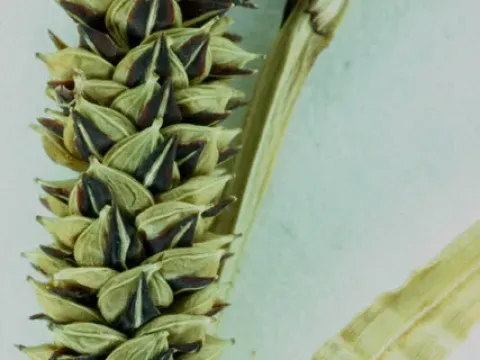
Narrow-leaved sedge
Carex angustata
The narrow-leaved sedge (Carex angustata) is a perennial member of the Cyperaceae family, well-recognized for its resilience in wetland and riparian environments. As a crop, it provides a stable ground cover in areas where traditional agricultural plants would struggle due to moisture saturation.
What the section contains
Narrow-leaved sedge
Botanically, this species is characterized by its creeping rhizomes and thin, elongated leaves. These structures allow the plant to colonize wet areas effectively, creating dense mats that prevent soil erosion and improve the overall structure of boggy soils.
Regarding soil and climate, Carex angustata thrives in alluvial and organic-rich substrates. It is highly tolerant of waterlogging and periodic flooding, making it an excellent candidate for semi-natural grassland management in low-lying landscape positions.
The climate requirements for this plant include moderate temperatures and consistent water availability. It is a hardy species, showing excellent cold tolerance, which is essential for survival in diverse regional climates where spring frost is common.
In terms of agricultural use, this sedge is harvested primarily as a component of wild hay. While it may not provide the same energy density as cultivated cereal grasses, its ability to produce significant biomass in wet conditions makes it an invaluable resource for low-input livestock farming.
Common health threats to Carex angustata populations include fungal pathogens such as rusts and smuts. These typically occur when the crop is subjected to stagnant water conditions for prolonged periods or poor air circulation within the dense sedge canopy.
Invertebrate pests, such as leaf-eating beetles and specialized weevils, can affect the plant's leaf area. However, these infestations rarely reach levels requiring intervention, as the species is robust and capable of regenerating quickly under natural meadow conditions.