
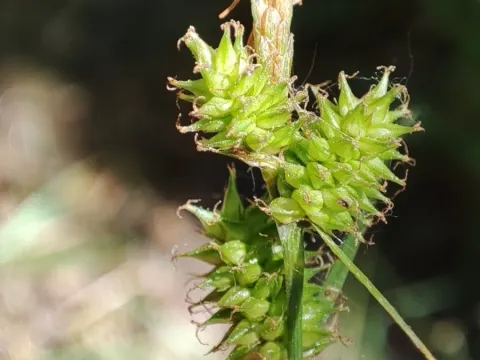
Maire's sedge
Carex mairei
Maire's sedge (Carex mairei) is a robust perennial herbaceous plant belonging to the Cyperaceae family. It is primarily known for its preference for wet habitats, often dominating wetland ecosystems where it thrives in hydric soil conditions.
What the section contains
Maire's sedge
The plant grows in dense, tufted clumps, displaying long, linear, and coarse leaves that contribute to its structural integrity. This tufted growth habit is an evolutionary adaptation that allows the plant to persist in fluctuating water levels and competitive vegetation environments.
The root system of Carex mairei is extensive and fibrous, providing excellent soil binding properties. This makes the species an ideal candidate for ecological restoration projects, specifically for stabilizing stream banks and preventing riparian erosion.
Regarding soil requirements, Maire's sedge prefers nutrient-rich organic soils or heavy loams that retain moisture effectively. While it is tolerant of a range of pH levels, it performs best in neutral to slightly acidic conditions typical of wetland peripheries.
Climate adaptation is a key feature of this species. It is well-suited for temperate climates and requires consistent moisture availability throughout the growing season to maintain its vigor and green biomass production.
Maire's sedge is susceptible to various fungal pathogens when cultivated in stagnant water or poorly ventilated areas. Rust and leaf spot diseases are the most common afflictions, often manifesting as necrotic lesions on the foliage.
Pest pressures include various insects that target the rhizomes and leaf bases, causing structural damage. Early detection is critical, as heavy infestations can lead to the decline of entire patches, especially in dense commercial stands.
Proper field management, such as controlled spacing, is essential to mitigate disease spread. By ensuring adequate airflow between the clumps, farmers can naturally suppress the development of mold and mildews without excessive chemical use.
Excessive fertilizer application can inadvertently make the plant more attractive to sucking insects. A balanced approach to nutrition, focusing on maintaining soil structure rather than just forcing growth, is recommended for sustainable management.
In addition to biotic threats, abiotic stress such as prolonged drought can severely impact the plant's health. Maintaining stable soil moisture is the primary defense against most environmental stressors that affect the longevity of Maire's sedge.