
Cyperus aethiops
Cyperus aethiops
Description
Growing requirements
Cyperus aethiops is a perennial herbaceous plant belonging to the Cyperaceae family. It originates from the tropical regions of Africa and is primarily found in wetland habitats and marshy areas.
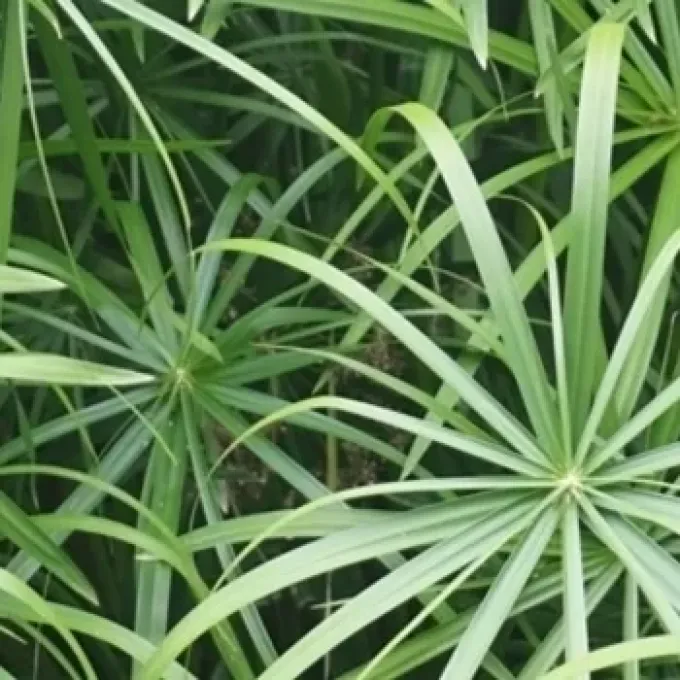
Botanically, it is a rhizomatous geophyte characterized by tall, upright, triangular stems and distinctive, umbrella-like bracts at the top of the stalks, typical of the Cyperus genus.
This species is highly demanding in terms of water. It thrives in saturated soils or shallow standing water and requires high atmospheric humidity to maintain its vibrant green foliage.
The ideal soil substrate for Cyperus aethiops should be rich in organic matter, loose, and well-aerated to prevent oxygen deprivation in the roots while maintaining constant moisture.
Temperature is a key factor for success. It performs best in a range of 18°C to 26°C. It is a frost-sensitive plant and requires indoor protection or greenhouse conditions in cooler climates.
Yield
Cyperus aethiops is mainly valued for ornamental purposes, particularly in landscaping and water gardening, where it serves as a structural element along pond margins.
In addition to decorative use, the stems have potential applications as natural fibers. The long, fibrous stalks can be harvested and used for weaving mats, baskets, and decorative crafts.
The plant is increasingly used in environmental engineering for wastewater treatment. Its ability to absorb excess nutrients makes it an excellent choice for natural water filtration systems.
Biomass production is highly dependent on light intensity and nutrient availability. Under optimal conditions, the plant can spread rapidly, providing a high density of foliage per square meter.
Propagation is primarily vegetative, through rhizome division. This method ensures uniform growth and allows for consistent scaling of production plots in specialized nurseries.
Main diseases and pests
Spider mites represent a primary pest threat, especially when ambient air humidity drops or temperatures exceed optimal levels, leading to foliage drying and yellowing.
Mealybugs can become a significant issue in indoor settings, hiding in the leaf axils and stems, which requires consistent monitoring and application of soft soaps or biological controls.
Root rot, driven by stagnant, poorly aerated water, can lead to sudden collapse of the plant. Maintaining water movement or periodic refreshment of the substrate is vital for health.
Fungal leaf spot diseases may appear if the foliage remains wet for extended periods in environments with poor air circulation, necessitating improved ventilation and plant spacing.
Improper fertilization can lead to nutrient deficiencies, manifesting as chlorosis. Providing a balanced, water-soluble fertilizer specifically for aquatic or bog plants is recommended.