
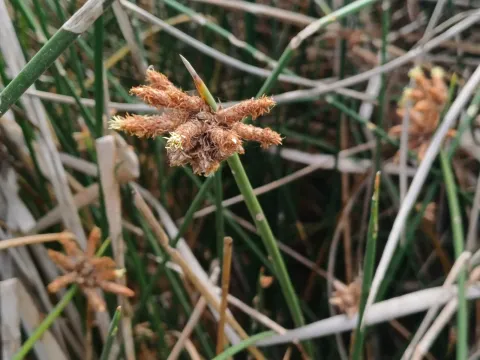
California bulrush
Schoenoplectus californicus
Planting California bulrush is primarily conducted via vegetative propagation, using rhizome divisions, from late spring through early summer.
What the section contains
California bulrush
The optimal time for cultivation begins when water temperatures reach 15–18 degrees Celsius, which promotes rapid rooting in the bottom substrate.
When using seed-based methods, sowing is carried out in trays with moist substrate in early spring to produce seedlings for later transplantation.
Maintaining a stable moisture level is critical during initial stages to prevent the desiccation of young shoots before a robust root system forms.
Planting density is calculated based on project goals, typically ranging from 3 to 5 plants per square meter to ensure even aquatic coverage.
California bulrush belongs to the Cyperaceae family and is a perennial herbaceous plant well-adapted to shallow water environments.
For successful development, the crop requires consistent water levels between 20 and 80 centimeters, providing stability and hydration.
Preferred soil types include silty, organic-rich substrates with a neutral or slightly acidic pH, typical of natural or artificial wetland ecosystems.
The plant is light-loving; therefore, open and well-lit areas without heavy shading must be selected to maximize biomass yield.
The temperature regime should remain moderately warm; while the plant tolerates light frosts, it requires protection for its root system within the water column.
The biomass yield of California bulrush depends on the water's trophic level and planting density, often reaching significant volumes in industrial settings.
Harvesting stems is performed upon reaching full maturity, when lignin and cellulose content is optimal for subsequent industrial processing.
Under intensive management, yields can reach several tons of dry weight per hectare, making the crop economically viable for manufacturing materials.
Annual shoot regeneration from rhizomes allows the plantation to be harvested for many years without the need for periodic replanting.
Collection efficiency is directly correlated with mechanization, which significantly reduces labor costs during large-scale cultivation efforts.
Major diseases include fungal infections of the stems, which occur when water circulation is poor and organic debris accumulates in the growth zone.
Among pests, insects that damage stem tissues pose the greatest threat, as they decrease the quality of the harvested industrial raw material.
Biological control involves maintaining water cleanliness and preventing the overgrowth of weeds that might compete for essential growth resources.
Chemical protection is rarely used due to the specific nature of the aquatic environment and ecological risks to local fauna.
Disease prevention consists of timely removal of old biomass, which stops decay processes and inhibits the spread of pathogenic microflora.
Harvesting is performed using traditional cutting methods at the base of the stems, as close to the water level or the bottom as possible.
Specialized floating mowers or manual tools are employed to ensure minimal disruption to the plant's sensitive root system.
Collected raw material undergoes a drying phase to remove excess moisture, preventing mold development during long-term storage.
Harvest timing depends on intended use: flexible young stems are selected for weaving, while mature, rigid stems are preferred for construction.
After collection, it is essential to store the material in dry conditions to preserve the physical and mechanical properties of the fibers.