
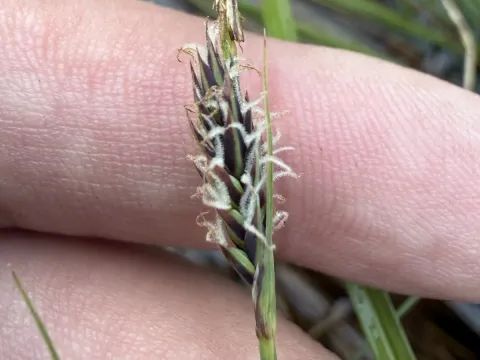
Buxbaum's sedge
Carex buxbaumii
Buxbaum's sedge (Carex buxbaumii) is a perennial herbaceous plant belonging to the Cyperaceae family. It is a circumboreal species, widely distributed across the northern hemisphere, including significant regions of North America, Europe, and Asia.
What the section contains
Buxbaum's sedge
Botanically, it is recognized by its loose, tufted growth habit and triangular stems. The leaves are typically glaucous, possessing a distinct bluish-green color, which contrasts with the dark brown to blackish scales on the flowering spikes.
The plant demonstrates strict requirements for habitat, predominantly favoring wet meadows, fens, and the margins of marshes. It is adapted to thrive in saturated soil conditions where water tables remain at or near the surface for the majority of the growing season.
Regarding soil, this species prefers organic substrates such as peat, often thriving in slightly acidic environments. It is highly tolerant of cold climates, showing remarkable resilience to frost, which enables its survival in northern tundra and boreal forest zones.
While not commonly grown as a commercial food crop, Buxbaum's sedge serves vital roles in landscape ecology. It is utilized in restoration projects for wetland stabilization, erosion control along riparian corridors, and as part of natural filtration systems for wastewater management.
The main threats to this species include habitat loss resulting from drainage for agriculture or infrastructure development. Although generally robust, the plant can be susceptible to various fungal pathogens that affect sedges, particularly in stagnant, polluted water conditions that hinder proper nutrient cycling.