
Bulrush
Schoenoplectus carinatus
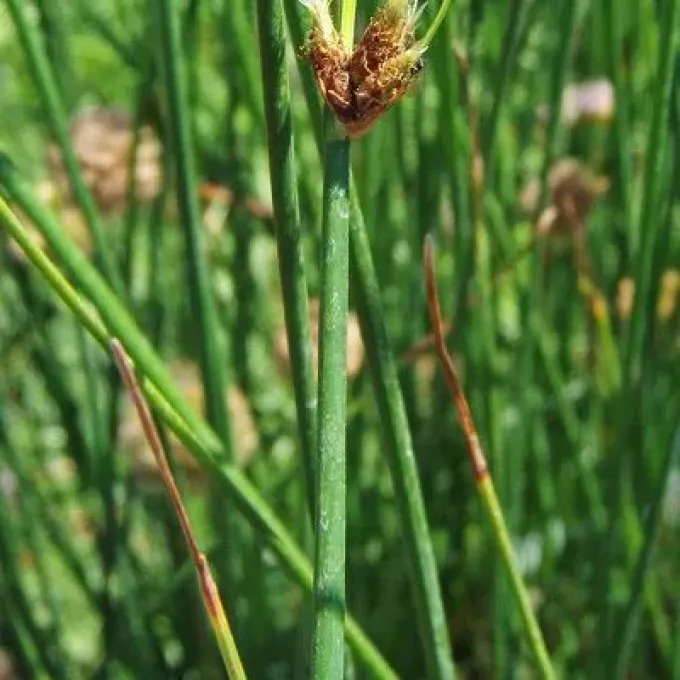
Description
Sowing dates
Bulrush (Schoenoplectus carinatus) is a member of the Cyperaceae family. The plant propagates effectively through seeds or vegetatively by dividing its robust rhizomes.
Seeding in controlled environments or restoration projects should take place in spring, once water and soil temperatures consistently reach 12-15 degrees Celsius.
Seeds require high substrate moisture and sufficient light exposure, as their germination process is strictly dependent on favorable photoperiods.
Vegetative propagation via rhizome fragmentation is preferred for commercial plantations, as it allows for quicker establishment in the bottom substrate.
Transplanting should occur at the beginning of the growth season with a planting density of 5 to 8 units per square meter to ensure a uniform stand.
Growing requirements
This species is a hygrophyte requiring constant root moisture. The ideal water depth for Schoenoplectus carinatus ranges from 10 to 50 centimeters.
The plant thrives in sunny, open locations. Excessive shading inhibits its metabolic processes and significantly reduces overall productivity.
Bulrush requires nutrient-rich substrates, performing best in silty, clay, or sandy-silty soils that contain a high concentration of organic matter.
While the plant is highly adapted to water level fluctuations and seasonal flooding, it is sensitive to complete substrate desiccation during the growing period.
It survives temperate climates well, provided the rhizomes remain moist or submerged to protect them from extreme freezing temperatures in shallow areas.
Yield
The primary agricultural and environmental use of Schoenoplectus carinatus is phytoremediation, effectively filtering pollutants from wastewater.
Yields of green biomass are strongly correlated with the nutrient levels of the aquatic environment and the overall health of the ecosystem.
Biomass can be harvested for industrial purposes, such as cellulose production, or used as a sustainable material for traditional building and crafts.
Harvesting is conducted at the end of the growth season when stalks possess maximum mechanical strength and structural maturity.
Dry mass yields typically range from 5 to 12 tons per hectare, making it a viable crop for optimizing low-lying or waterlogged lands.
Main diseases and pests
The plant is naturally resilient to most diseases, but monoculture stands may suffer from fungal infections if water becomes stagnant for long periods.
Common pests include specific aquatic insects that feed on young shoots, as well as rodents that may damage rhizomes during the winter months.
Invasive plant species pose a significant threat by outcompeting bulrush for light and nutrients, potentially reducing the density of the stand.
Changes in water chemistry, such as high salinity or contamination by heavy metals, can degrade plant health and impact biomass quality.
Integrated management, including water flow regulation and periodic debris removal, is essential to maintain a healthy and productive bulrush population.
Harvesting
Mechanical harvesting is carried out using specialized mowers mounted on floating platforms or amphibious equipment designed for shallow waters.
The optimal harvest window is late summer to early autumn, when stalks reach their peak rigidity and are suitable for industrial processing.
Harvested material must be dried in natural conditions, spread in thin layers, to prevent fermentation or mold development during storage.
Effective biomass removal from treated water bodies is critical to prevent the re-release of accumulated contaminants into the aquatic system.
Stored bulrush should be kept in dry, well-ventilated buildings to preserve its structural integrity and material properties for later use.