
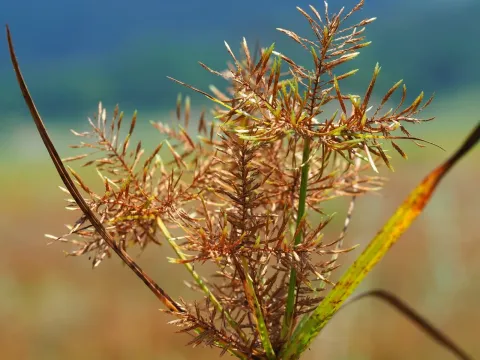
Finger sedge
Cyperus digitatus
Finger sedge (Cyperus digitatus) is a perennial herbaceous species belonging to the Cyperaceae family. It is widely recognized for its robust growth habit and preference for moist, riparian environments, often thriving in wetlands and flood-prone agricultural zones.
What the section contains
Finger sedge
Native to tropical regions across Africa, Asia, and the Americas, this sedge is highly adapted to humid conditions. It possesses an extensive rhizomatous root system, which enables it to anchor firmly in soft, water-saturated soils and tolerate occasional immersion in water.
Botanically, the plant is characterized by tall, triangular stems and distinct, finger-like inflorescences. The leaves are typically basal or cauline, linear in shape, and contribute to the plant's high biomass production potential in fertile, wet soils.
The cultivation requirements for this species focus on maintaining high soil moisture levels and warm temperatures. As a tropical plant, it is intolerant of frost and requires consistently high humidity to maximize vegetative growth and yield potential.
In terms of agricultural use, Finger sedge is valued as a raw material for weaving and handicraft industries. Additionally, it serves ecological functions such as soil stabilization along water bodies and potential application in wastewater management systems due to its nutrient uptake capacity.
Fungal diseases are the primary threat to Finger sedge, especially in environments with poor water circulation. Root and crown rot can quickly develop in stagnant water, leading to a rapid decline in the plant's overall health and vigor.
Insect pests include various borers and lepidopteran larvae that target the stems, causing structural damage. Such feeding activities interrupt the transport of water and nutrients, leading to chlorosis and stunted development of the affected tillers.
Weed competition represents a significant challenge during the establishment phase. Because the plant has a slow initial growth rate, early-stage intervention is necessary to ensure the crop is not overtaken by faster-growing invasive grasses.
Vertebrate pests, including rodents, may occasionally feed on the nutrient-rich rhizomes, leading to severe damage in localized areas. Implementing site-specific exclusion methods can help mitigate these losses in commercial plantings.
Effective management of threats relies on integrated pest management (IPM) practices, emphasizing cultural controls such as water level management and careful site selection to minimize pathogen build-up in the substrate.