
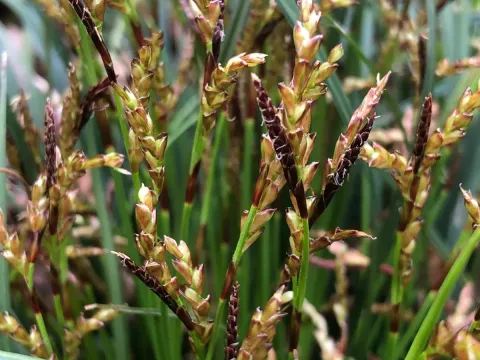
Finger sedge
Carex digitata
The finger sedge (Carex digitata) belongs to the Cyperaceae family. It is a perennial herbaceous plant that forms small, loose tufts. The plant is botanically identified by its narrow basal leaves and distinctive finger-like spikes in its inflorescence, which serve as a clear diagnostic feature.
What the section contains
Finger sedge
Its natural range extends across the forest zones of Eurasia. The species is widely distributed throughout European forests and parts of Siberia. It is a shade-tolerant plant, primarily adapted to the understory of coniferous and deciduous forests, where it thrives in low-light environments.
Regarding soil requirements, Carex digitata prefers moderately moist, nutrient-rich soils, including loams and forest podzols. Its adaptation to shade allows it to compete effectively with other species in the forest floor layer, where many agricultural grasses would fail to survive due to light limitations.
Climate tolerance is one of the plant's greatest strengths. As a boreal species, it possesses excellent winter hardiness, allowing it to withstand extreme cold without damage. It is well-suited for temperate and subarctic climates, responding positively to the arrival of spring moisture.
In terms of agricultural use, finger sedge is considered a valuable component of forest pastures. It provides early-season green forage for livestock and wildlife, emerging earlier than many other forage grasses and bridging the gap in nutrient availability during the early spring grazing season.
The finger sedge exhibits strong natural resistance to common plant diseases. While fungal infections such as rust may occur in areas with poor ventilation or excessive humidity, the impact is generally minor and rarely requires active intervention in the field.
Pest pressure is relatively low compared to cultivated crops. The plant is occasionally visited by specialized leaf-miners or certain lepidopteran larvae that feed on sedge tissue, but such interactions typically remain part of the natural ecological balance rather than an economic threat.
There are no standardized chemical pest management practices for this species, as it is generally managed within natural or semi-natural forest grazing systems. Maintaining a healthy stand depends more on sustainable land management than on the application of synthetic pesticides.
The primary threat to the longevity and productivity of finger sedge is habitat degradation, particularly soil drainage. As a plant that prefers damp, cool forest conditions, the drying out of its habitat can lead to a decline in vigor and eventual displacement by more drought-tolerant weeds.
Excessive trampling by livestock can also damage the rhizomes, hindering the plant's ability to reproduce vegetatively. Careful monitoring of grazing pressure is necessary to ensure that the dense matting of the sedge remains intact and continues to provide seasonal forage resources.