
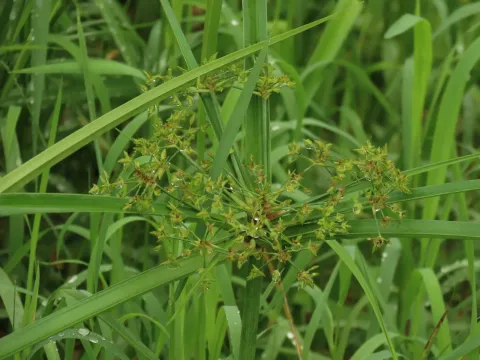
Flat-styled flatsedge
Cyperus platystylis
Flat-styled flatsedge (Cyperus platystylis) is a herbaceous perennial plant belonging to the Sedge family (Cyperaceae). This species is well-adapted to habitats characterized by high water content, commonly found in tropical and subtropical regions across the globe.
What the section contains
Flat-styled flatsedge
The plant originates from marshy and riparian areas, where it plays a significant role in maintaining the local ecosystem balance. It is widely distributed across several continents, preferring areas with high humidity and fertile, silty soils found in deltas and floodplains.
Botanically, it is distinguished by a strong, fibrous root system that anchors the plant firmly into the sediment. The leaves are typically narrow and grass-like, while the stems can grow to a considerable height depending on the availability of nutrients and water.
Agricultural requirements focus primarily on water management. The plant needs constant saturation of the root zone, mimicking the conditions of natural wetlands. Optimal growth occurs in temperatures ranging between 20°C and 30°C, ensuring continuous metabolic activity.
Proper soil preparation involves ensuring high organic content, which is essential for the rapid growth of the biomass. Regular monitoring of water quality is critical, as the plant reacts negatively to excessive salinity or chemical pollution in the water supply.
The primary threats to Cyperus platystylis crops are fungal infections that proliferate in stagnant, poorly oxygenated water. Root rot is a major concern that can lead to rapid decay of the entire crop if not addressed through proper management.
Pests such as aquatic snails and various insects can cause mechanical damage to the foliage. These pests often congregate on the stems, causing nutrient deficiency and making the plant vulnerable to secondary infections by bacteria or viruses.
Management of these threats involves biological control methods that maintain the ecological balance of the water system. Reducing the density of plantings can improve air circulation and sunlight penetration, which helps in suppressing fungal growth.
Preventive measures include the selection of healthy planting stock and regular cleaning of the cultivation beds to remove decomposing organic matter. Maintaining a clean water source is essential for preventing the introduction of pathogens to the site.
Successful farming of this crop relies on monitoring the environmental conditions closely. By maintaining optimal depth and nutrient levels, farmers can create a resilient environment that minimizes the impact of typical pests and common wetland diseases.