
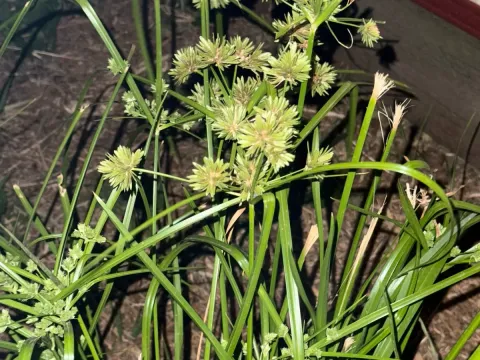
Tall flat sedge
Cyperus eragrostis
Tall flat sedge (Cyperus eragrostis) is a perennial herbaceous plant belonging to the Cyperaceae family. In agricultural settings, it is widely recognized as a persistent weed that thrives in wet soils and irrigated lands, often interfering with crop production.
What the section contains
Tall flat sedge
Originally native to South America, this species has become naturalized in many regions across the globe. It is commonly found in riparian habitats, wetlands, and agricultural areas with poor drainage, where it competes aggressively for space and resources.
Botanically, the plant is characterized by its triangular stems and distinctively branched inflorescences. It possesses a robust rhizomatous system that stores nutrients, allowing the plant to survive adverse conditions and regenerate quickly after cutting or grazing.
Regarding soil requirements, the species performs best in moist, fertile soils. It demonstrates high tolerance to both saturated conditions and seasonal drought, which contributes to its status as a challenging weed to control in diversified farming systems.
Temperature plays a crucial role in its growth cycle. The plant prefers warm, temperate climates with optimal development occurring during spring and summer months. Its ability to spread both by seed and rhizome fragments makes it a significant management concern.
Pathogens affecting the tall flat sedge include various leaf-spotting fungi and rusts. While these infections may impact individual plants, they rarely exert sufficient pressure to control the population density in agricultural environments.
Insect pests are generally minimal. The plant possesses a chemical profile that often deters common herbivores, meaning the weed can flourish even in areas where other flora are heavily predated upon by local insect populations.
Management strategies focus on a combination of cultural and chemical methods. Cultural practices include improving field drainage systems and performing deep tillage to disrupt the rhizome network, which is vital for reducing long-term infestation.
Chemical control involving systemic herbicides is standard practice. These agents are applied to the foliage, allowing for translocation down into the rhizomes, which is necessary to achieve high levels of mortality for such an resilient perennial species.
Preventative measures remain the most effective long-term solution. Ensuring the use of clean equipment between fields, coupled with rigorous monitoring during the early stages of establishment, helps to prevent the spread of the plant to unaffected zones.