
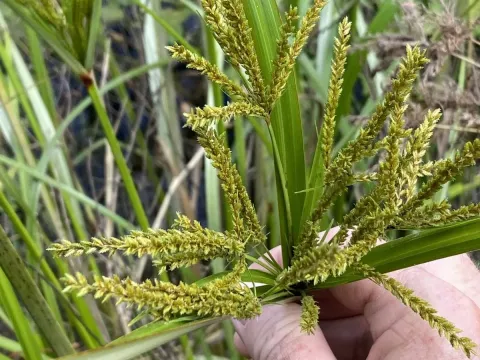
Tall Flatsedge
Cyperus exaltatus
Tall Flatsedge (Cyperus exaltatus) is a robust perennial herb belonging to the Cyperaceae family, widely recognized for its adaptability to wetland environments.
What the section contains
Tall Flatsedge
The sowing process begins when soil temperatures consistently reach 18–22 degrees Celsius, ensuring optimal germination conditions for the seeds.
For large-scale cultivation, propagation is typically managed through the division of rhizomes, which provides a more consistent and faster growth cycle than seed.
When using seeds, they should be surface-sown in a well-prepared, moist potting medium, as they require light to stimulate the biological process of germination.
Planting density is a critical factor for success; spacing the plants approximately 30 by 40 centimeters apart allows for adequate airflow and individual plant development.
This species is a water-loving plant that thrives in saturated soils, frequently found near riverbanks, ponds, and irrigated fields where moisture is abundant.
Fertile soils, particularly those rich in silt or clay, provide the best nutritional foundation for the rapid formation of its tall, upright stems.
Exposure to full sunlight is essential for the healthy growth of Cyperus exaltatus; therefore, cultivation sites should be free of overhead canopy or shading.
The crop is highly sensitive to extreme cold, necessitating a climate that provides stable, warm temperatures during the primary growth season for biomass production.
Maintaining high humidity and moisture levels in the root zone is the most critical agricultural management practice to prevent stress and ensure high yields.
The primary agricultural use of Tall Flatsedge involves harvesting its biomass, which serves as a supplemental fodder source for livestock in specific regions.
The stems are valued for their tensile strength and fiber quality, making them suitable for traditional crafts, such as weaving mats and various packaging products.
In environmental management, the species acts as a natural biofilter, effectively absorbing excess nutrients from water in constructed wetlands and drainage areas.
Proper management of nutrient inputs, particularly nitrogen-based fertilizers, can significantly boost the overall production of green mass per hectare.
Multi-cut harvesting strategies are possible throughout the growing season, provided that the plant is given sufficient time to recover between each cutting.
While relatively robust, the plant can be susceptible to fungal pathogens if the soil conditions become stagnant or lack proper drainage for extended periods.
Insect pests, including various types of aphids and root-dwelling larvae, represent the most common biological threats to consistent production levels.
Integrated pest management, focusing on biological controls and frequent field monitoring, is the most effective approach for maintaining healthy crop stands.
Weed competition during the initial establishment phase can significantly impede the development of the sedge, requiring timely weeding practices.
Water quality management is essential to prevent the accumulation of toxic substances that could stress the plants and invite secondary infections.
Harvesting for fodder should be timed to occur before the onset of flowering, which ensures the highest nutritional value and digestibility of the plant material.
For industrial or craft applications, harvesting is generally delayed until the stems have reached maximum maturity and structural rigidity.
Mechanical harvesting techniques can be applied, provided that the equipment is suitable for soft, wetland soil conditions to prevent excessive field compaction.
Post-harvest processing involves rapid drying in well-ventilated areas to prevent molding and ensure the long-term preservation of the fiber quality.
Strategic harvesting practices help maintain the vigor of the rhizome system, ensuring the longevity of the plant stand across multiple productive seasons.