
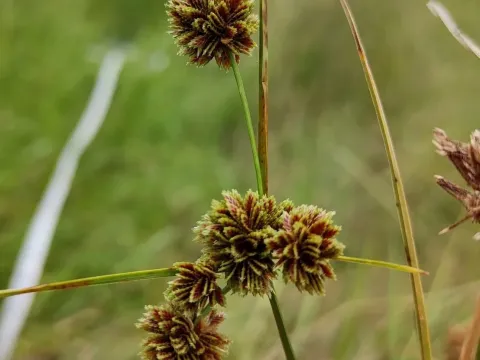
Cyperus reflexus
Cyperus reflexus
Cyperus reflexus is a robust perennial herb belonging to the Cyperaceae family. It is widely recognized for its ability to thrive in wetland environments and marshy habitats where other vegetation might struggle.
What the section contains
Cyperus reflexus
Originally native to South America, this species has successfully adapted to various subtropical climates. Its natural distribution is largely defined by its preference for habitats with consistent access to moisture.
Botanically, the plant is characterized by a fibrous root system and slender, triangular stems that are typical for the Cyperus genus. The foliage is primarily basal, providing a dense cover that supports soil stability.
The plant requires high humidity levels and thrives in moist or saturated soils. It is highly tolerant of waterlogged conditions, making it an excellent candidate for regions with seasonal flooding.
In terms of agricultural technique, the management of this crop focuses on maintaining the correct water levels and ensuring adequate sunlight. Proper spatial arrangement is essential to avoid excessive crowding and facilitate healthy growth.
The primary agricultural utility of Cyperus reflexus lies in its role as a wetland vegetation component. It is frequently employed in soil stabilization efforts to prevent bank erosion in irrigation channels.
In environmental engineering, this species is valued for its potential in phytoremediation. It acts as a bio-filter, helping to absorb excess nutrients and pollutants from agricultural runoff water.
While not a traditional food crop, its biomass can be processed into organic soil amendments. The high fiber content makes it potentially useful for the production of specialized bio-based materials.
The plant serves as a natural habitat for beneficial insects and small aquatic organisms, contributing to the overall biodiversity of the agricultural landscape.
Local utilization of this plant often includes its integration into sustainable drainage systems where it manages excess water while simultaneously enhancing the aesthetic value of the area.
Common health issues for this plant include various fungal infections, especially when grown in stagnant water or under conditions of poor ventilation. These pathogens often manifest as leaf spots or stem rot.
Pest pressures are generally manageable but can include specific insect species that target the succulent tissues of sedges. Monitoring is recommended to prevent localized outbreaks.
The most effective strategy against threats is the maintenance of a dynamic water flow. Avoiding stagnant water environments significantly reduces the incidence of soil-borne pathogens.
Cultural control measures, such as the selective pruning of dead or decaying foliage, help maintain the sanitary status of the crop and promote vigorous regrowth.
Integrated pest management protocols for this species emphasize environmental monitoring rather than chemical application, ensuring that the surrounding aquatic ecosystem remains undisturbed.