
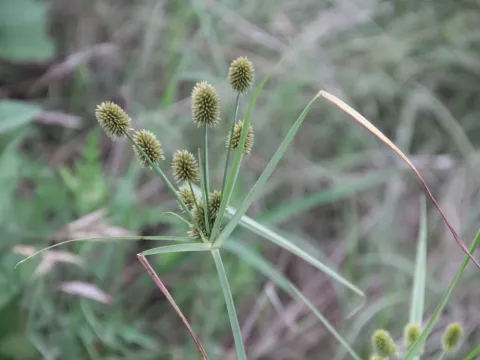
Cyperus retrorsus
Cyperus retrorsus
Cyperus retrorsus is a perennial plant member of the Cyperaceae family, commonly recognized as a persistent weed in various agricultural and pastoral settings across the Americas.
What the section contains
Cyperus retrorsus
The plant typically thrives in well-drained, sandy, or rocky soils, demonstrating a high tolerance for varying pH levels. It is known for its resilience and ability to establish dense colonies that can outcompete native or planted species.
Botanically, this species is defined by its triangular stem structure and distinct, reflexed inflorescences that give the plant its characteristic architectural form. Its leaves are narrow and tough, contributing to its durability in harsh environments.
Regarding climatic needs, Cyperus retrorsus prefers temperate to subtropical environments with adequate solar exposure. It is highly adaptable to periodic moisture fluctuations, though it prefers consistent humidity to reach full maturity.
Its agricultural impact is primarily linked to its role as a competitive weed. The plant's deep rhizomatous root system allows it to store nutrients efficiently, making it extremely difficult to eradicate once established in a field.
The plant is susceptible to several insect herbivores, including various species of aphids and larvae that feed on the structural tissues of the stem. These pests can significantly stress the plant under high-pressure conditions.
Fungal pathogens such as rust fungi and leaf spot diseases frequently target this species, especially in areas with poor airflow and high humidity. These diseases can lead to premature senescence of the foliage.
Management of Cyperus retrorsus is notoriously difficult due to the plant's robust root system. Chemical control using systemic herbicides is often necessary to achieve long-term management of the infestation.
Cultural methods, such as deep tillage or soil solarization, can assist in suppression if applied correctly. However, these methods are often labor-intensive and must be combined with post-emergent herbicide treatments.
Preventative measures include maintaining vigorous crop density to shade out the weed and conducting rigorous cleaning of agricultural machinery between fields to prevent the spread of rhizome fragments.