
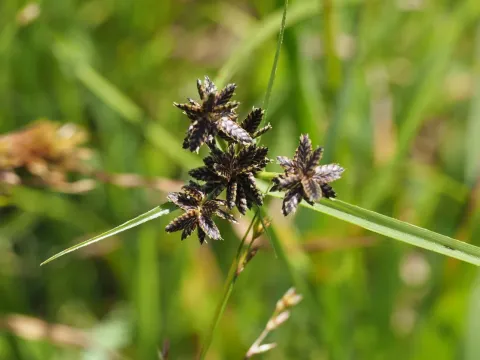
Cyperus sanguinolentus
Cyperus sanguinolentus
Cyperus sanguinolentus is a perennial herbaceous plant belonging to the Cyperaceae family. It is native to various regions in Asia, where it thrives in natural wetland habitats such as marshes, riverbanks, and flooded agricultural fields like rice paddies.
What the section contains
Cyperus sanguinolentus
Botanically, the species is distinguished by its slender, erect stems and characteristic reddish-tinged spikelets, which give the plant its scientific name. It typically forms dense clumps that contribute significantly to the local ecosystem's soil structure.
The plant has specific climate requirements, primarily focusing on high humidity and consistent moisture. It is best suited for cultivation in regions with stable water availability, as it cannot withstand prolonged periods of drought.
Soil requirements for optimal growth involve nutrient-rich, moist substrates. Loamy or silty soils with high organic matter content are preferred. Maintaining the correct pH level, ideally between slightly acidic and neutral, is crucial for nutrient absorption.
Agrotechnical practices emphasize water management. Whether grown for restoration or decorative purposes, the irrigation system must ensure the root zone remains consistently saturated without allowing for stagnant, anaerobic conditions in the substrate.
The primary threats to Cyperus sanguinolentus are fungal diseases such as root rot, which often occur due to poor drainage. Maintaining a balance between soil moisture and air circulation is essential for plant health.
Pests such as aphids and spider mites can infest the foliage, particularly in confined environments. Regular scouting and early intervention with mild insecticidal soaps are recommended to prevent population explosions.
Competition from faster-growing invasive grasses can hinder the development of this sedge. Mechanical weeding or the use of mulch can significantly reduce the pressure from competing species in early growth stages.
Environmental stress, including sudden temperature fluctuations or rapid changes in water levels, can weaken the plant's natural defenses. Strengthening the plant through proper fertilization schedules helps maintain its resilience.
In large-scale plantings, monitoring for localized infections is vital. Removing affected parts of the plant and preventing the spread of pathogens via tools or water runoff remains the standard procedure for site protection.