
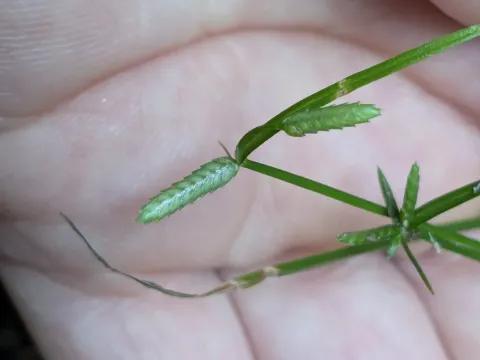
Cyperus laevis
Cyperus laevis
Cyperus laevis is a perennial herbaceous plant belonging to the Cyperaceae family. In agronomy, it is recognized as a specialty crop adapted to wetland environments, valued for its durability and structural properties.
What the section contains
Cyperus laevis
The plant thrives in well-lit areas with consistent moisture levels. Optimal cultivation sites include sandy or silty soils capable of retaining water, which is essential for the healthy development of its extensive root system.
This species exhibits a remarkable tolerance to salinity, allowing for successful production in coastal or brackish environments where other traditional crops might fail. It requires a warm, stable climate, as it is highly susceptible to frost damage.
Agronomic management involves maintaining high water table levels or employing systematic irrigation. In commercial setups, it is crucial to monitor soil salinity levels, as excessive accumulation can inhibit growth and fiber quality.
The economic value of Cyperus laevis lies in its utilization as a raw material. Its stems are widely used for weaving mats, baskets, and decorative items, and it plays a significant role in ecological restoration and coastal erosion control.
The primary threats to Cyperus laevis are fungal pathogens associated with waterlogging and poor air circulation. Root rot is a common issue when soil drainage is insufficient, leading to weakened plant stands.
Insect pests such as caterpillars and aphids can cause damage to the foliage and stems. Such infestations are more prevalent in warm climates and can negatively affect the overall yield if left unmanaged.
Disease management relies on crop rotation and the removal of plant debris, which acts as a reservoir for pathogens. Preventive measures are more effective than curative treatments for this specific crop.
Biological pest control methods are preferred, especially when the end product is intended for handicrafts. Minimizing chemical pesticide use ensures that the harvested material remains safe for human interaction.
Field monitoring is critical to detect early signs of infestation. Regular inspection of the stem bases allows farmers to intervene quickly, preventing the spread of localized issues throughout the field.
Harvesting is performed once the stems have reached their optimal density and strength. Timely collection is crucial, as delayed harvest can result in fiber embrittlement and loss of aesthetic quality.
Post-harvest processing involves stripping leaves and sorting stems by length and diameter. This manual sorting stage is vital for standardizing the raw material for commercial production.
Drying is conducted in shaded areas with high ventilation. This controlled drying process preserves the natural elasticity of the fibers and prevents the material from becoming brittle or discolored.
Stored raw materials must be kept in cool, dry conditions to prevent mold and mildew growth. Humidity control in storage facilities is essential to maintain the structural integrity of the fibers.
Efficient logistics during the harvest period ensure that the stems reach the processing facility while still in good condition. Proper handling is key to maximizing the value of the final artisanal products.