
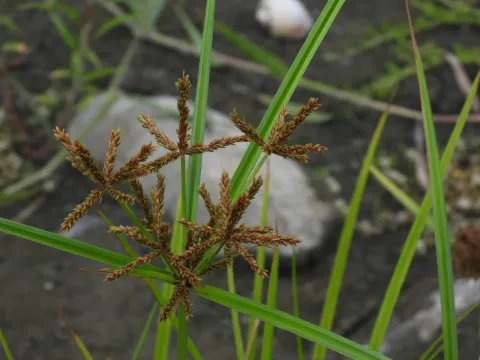
Cyperus imbricatus
Cyperus imbricatus
Cyperus imbricatus, commonly known as shingle flatsedge, is a perennial herbaceous plant belonging to the Cyperaceae family. It is a thermophilic crop that thrives in tropical and subtropical climates, typically propagated through rhizome division or direct seeding in warm conditions.
What the section contains
Cyperus imbricatus
Sowing should be performed in moist, well-prepared soil once ambient temperatures remain consistently high. The seeds require significant light exposure and consistent soil moisture to successfully germinate and establish initial root systems.
The optimal planting time coincides with the start of the warm season, avoiding any risk of frost which the plant cannot tolerate. The plant exhibits high vigor, quickly forming dense mats in environments that provide sufficient moisture and nutrients.
In commercial cultivation, seeds are sown in rows with precise spacing to encourage uniform stem growth. Proper moisture management during the germination phase is critical for achieving high plant density.
Once established, the plant shows remarkable resilience, allowing for sustained growth cycles. In managed fields, timing the planting ensures that the crop can reach its full potential during the peak of the growing season.
This crop is a true hygrophyte, requiring constant access to water or saturated soil conditions for optimal growth. It is naturally suited to riverbanks, wetlands, and flooded agricultural areas where water table levels remain high.
The ideal soil profile includes rich, loamy, or silty substrates with high organic content. The plant thrives in soils with high water-holding capacity, which provides the necessary hydration for its rapid biomass accumulation.
Cyperus imbricatus requires high levels of solar radiation to maintain active photosynthesis. Partial shade is tolerated but generally leads to decreased biomass production and inferior stem strength compared to plants grown in full sun.
Temperature requirements are strict, with an optimal range between 22 and 30 degrees Celsius. Exposure to cold or freezing temperatures causes severe physiological stress and can halt growth entirely.
Agrotechnical practices include maintaining water levels in the field and the periodic application of nitrogen-rich fertilizers to support the rapid development of stems used in industrial applications.
The economic value of Cyperus imbricatus lies in its biomass, which is harvested for use in weaving, handicrafts, and as a natural material for mats and baskets. Yields are maximized through consistent moisture and nutrient management.
Under optimal tropical conditions, multiple harvests per year are possible due to the plant's rapid regenerative capacity. Proper cutting techniques ensure that the rhizomes remain healthy for subsequent regrowth.
Quality control is centered on stem length, diameter, and flexibility. Dense cultivation patterns encourage the growth of long, straight, and pliable stems, which are the most sought-after in the cottage industry.
Production efficiency varies by region, but in managed nurseries, yields are consistently high. The biomass must be processed carefully after harvest to maintain its structural integrity for commercial weaving.
Post-harvest handling involves drying the stems in shaded, ventilated areas to ensure they retain their elasticity and color, preventing the degradation that can occur under intense sunlight.
Cyperus imbricatus is generally robust and resistant to many common agricultural diseases due to its aquatic nature, which naturally limits the proliferation of various soil-borne pathogens.
However, stagnant water conditions can occasionally facilitate the development of root rots. Maintaining adequate water circulation and avoiding excessive overcrowding in the fields are effective preventative measures.
Pests such as stem-boring insects and certain larvae can cause damage to the stems. Such damage reduces the commercial value of the fiber, necessitating regular monitoring of the plantation.
Integrated pest management is preferred over chemical interventions. Physical barriers and biological controls help protect the crop while ensuring that the end product remains free of harmful chemical residues.
Environmental threats also include water contamination, as the plant acts as a bio-filter and accumulates pollutants, which can negatively impact its overall health and vitality over long production cycles.
Harvesting is typically performed by hand or using specialized machinery, timed for when the stems reach peak length and before the plants initiate their flowering phase to ensure maximum fiber quality.
Cutting at or slightly above the soil line is essential to encourage new shoots to emerge from the rhizomes, ensuring the longevity of the plant beds and consistency in future yields.
Once harvested, stems are sorted by length and thickness. The moisture content must be monitored closely to ensure that drying happens uniformly, preventing mold formation on the raw material.
Drying occurs in covered, well-ventilated structures. Protecting the stems from direct sunlight is crucial to prevent the fibers from becoming brittle and to maintain the desirable aesthetic qualities of the natural material.
The final product is tied into bundles for storage and transport. Keeping these bundles in a dry, elevated environment preserves their flexibility, making them ready for processing by artisans and manufacturers.