
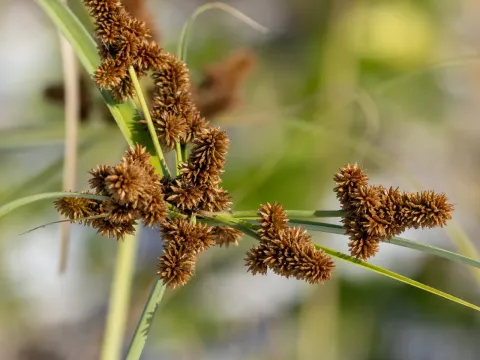
Jointed flatsedge
Cyperus ligularis
Jointed flatsedge (Cyperus ligularis) is a robust perennial herb belonging to the Cyperaceae family. It is naturally adapted to tropical and subtropical climates, typically thriving in moist soil conditions, salt marshes, and sandy coastal environments.
What the section contains
Jointed flatsedge
Botanically, the plant is distinguished by its dense, tufted growth habit and triangular stems. Its leaves are fibrous and rigid, an adaptation that helps the plant survive in harsh coastal environments where it is exposed to strong winds and saline spray.
For optimal growth, this crop requires high soil moisture levels and consistent access to water. It exhibits a remarkable tolerance for saline substrates, making it a viable candidate for land reclamation projects in coastal regions that are otherwise difficult to farm.
The plant performs best under warm temperatures, ideally between 20°C and 30°C. Adequate sunlight is essential for the accumulation of biomass, as shaded conditions often lead to etiolation and a significant decrease in the strength of the structural fibers.
In terms of agricultural utility, jointed flatsedge is valued for its fibrous stems, which are harvested for traditional handicrafts, weaving, and paper production. Furthermore, its extensive root system plays a crucial role in preventing soil erosion in fragile coastal areas.
The primary pathological threats to the crop include various fungal rots that affect the base of the stems when water circulation is poor. Maintaining adequate drainage and sanitation helps manage these disease vectors effectively.
Insect pests, particularly lepidopteran larvae, can cause significant defoliation if left unchecked. Integrated pest management strategies that emphasize natural predators are often preferred to maintain the ecological balance of the wetland site.
Weed management is critical during the initial establishment phase of a new plantation. Once the root system is fully established, the plant becomes highly competitive and can naturally suppress the germination of surrounding weeds.
Abiotic stress, such as sudden drought conditions, can lead to the browning of leaf tips and a loss of fiber quality. Irrigation management must be precise to keep the soil saturated without allowing stagnant water to become anaerobic.
Small mammals and rodents may occasionally disturb the root stocks, especially during the dry season when other food sources are scarce. Protecting the perimeter of the crop site is generally recommended in areas with high wildlife density.