
Japanese sedge
Carex japonica
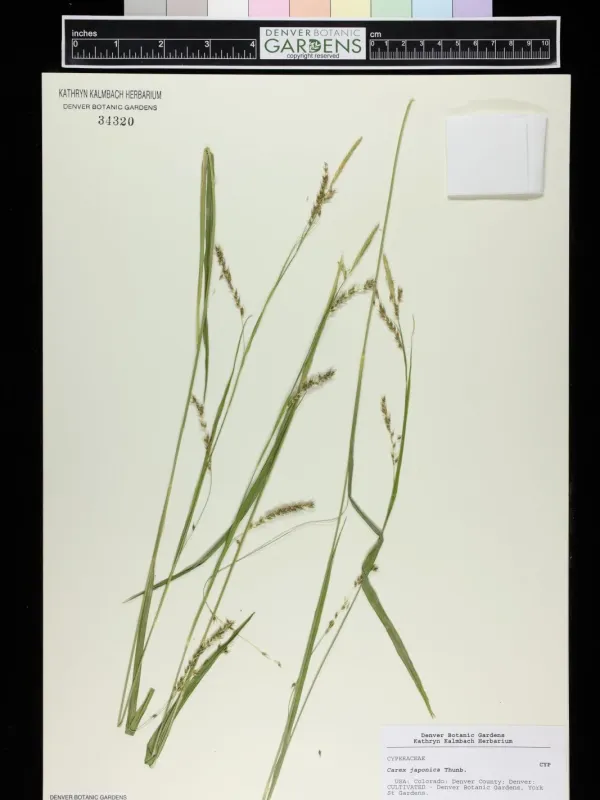
Description
Growing requirements
Japanese sedge (Carex japonica) is a perennial member of the Cyperaceae family, prized for its arching foliage and dense growth habit. Native to East Asia, it thrives in environments that mimic moist woodlands and riparian zones, making it an excellent candidate for shaded garden landscapes.
The plant performs best in partial to full shade, especially in regions with high summer temperatures. Protecting the foliage from intense midday sun is essential, as direct exposure often causes leaf scorch and reduces the overall visual appeal of the clumps.
When considering soil requirements, Japanese sedge favors consistent moisture and organic-rich environments. Loamy soils with good water retention properties are ideal, though they must provide sufficient drainage to avoid root rot, particularly during winter dormancy when metabolic activity slows significantly.
This species shows moderate cold tolerance but benefits from a layer of mulch in climates where winter temperatures fluctuate significantly. A light organic cover helps stabilize soil temperatures around the rhizomes, protecting the plant from the stress of freeze-thaw cycles.
Cultural management involves regular hydration throughout the growing season. While the plant is resilient, it should not be allowed to dry out completely. Early spring maintenance includes cutting back dead foliage, which facilitates the emergence of fresh, healthy blades and maintains the vigor of the plant.
Main diseases and pests
Japanese sedge is generally resistant to major pests and diseases. However, poor drainage can lead to root diseases, and high humidity levels in stagnant air may occasionally trigger fungal issues such as leaf spot, which are best managed through thinning and improved spacing.
Occasional infestations of sap-sucking insects, such as aphids or spider mites, can occur during prolonged periods of dry weather. Effective control includes monitoring leaf undersides and implementing basic horticultural sanitation to minimize the habitat for these pests.