
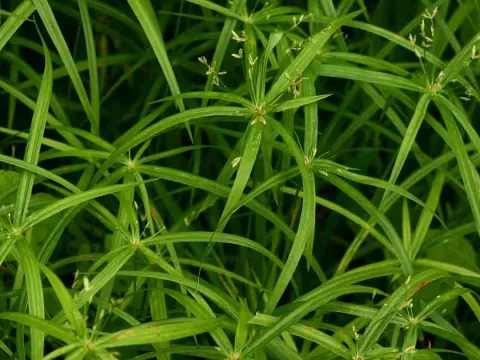
Cyperus elatus
Cyperus elatus
Cyperus elatus is a perennial herbaceous plant belonging to the Cyperaceae family. In agricultural practices, the crop is most commonly propagated vegetatively through the division of rhizomes, which allows for the preservation of the mother plant's varietal characteristics.
What the section contains
Cyperus elatus
When propagating by seed, sowing is performed under controlled greenhouse conditions, as the seeds require high substrate moisture for successful germination. The optimal time for establishing plantations in open ground is spring, once the soil has warmed up and the risk of late frosts has passed.
Site preparation involves deep plowing and mandatory irrigation, as the crop is extremely demanding regarding water availability. Planting density is calculated based on the intended use, whether for ornamental purposes or for the extraction of technical biomass.
Young plants require constant monitoring of water levels during their first year of growth. When using seeds, germination may be irregular, so prior stratification of the planting material for 30-45 days is recommended.
Maintaining intervals of at least 40-50 centimeters between rows ensures optimal aeration and light access to the base of the shoots. This is critical for preventing rot in dense plantings.
Cyperus elatus is a hygrophilous plant, with a natural range covering primarily tropical and subtropical regions. It is perfectly adapted to life in waterlogged soils, river floodplains, and along the banks of bodies of water.
For normal growth, the crop requires organic-rich, slightly acidic, or neutral soils. Silty and peaty substrates, capable of holding moisture for long periods without the buildup of toxic compounds, are considered ideal.
The temperature regime should remain between +20 and +30 degrees Celsius. The plant does not tolerate prolonged sub-zero temperatures, so in temperate latitudes, it is cultivated as an annual or requires winter protection.
High light levels are essential, although Cyperus can tolerate minor shading during midday hours. Light deficiency leads to elongated shoots and a loss of mechanical strength, which reduces the quality of the raw material obtained.
A major requirement is protection from strong winds, which can damage the fragile stems of the plant. Within agro-ecosystems, the creation of windbreaks around plantations is highly recommended.
The economic use of Cyperus elatus focuses on obtaining biomass for weaving and the production of traditional handicrafts. The stems of the plant possess high durability and elasticity after proper preliminary drying.
On an industrial scale, green biomass yield depends directly on the regularity of irrigation and nitrogen fertilization. Balanced nutrition allows for two to three cuttings per growing season.
Processing the raw material requires specific knowledge of stem drying and preservation methods. Properly harvested material is durable, resistant to rapid decay, and retains its natural coloration.
The use of the plant as fodder is limited due to high fiber content and leaf toughness. However, in some regions, Cyperus is used as a component in organic fertilizer composting.
Yield potential can be increased through the implementation of intensive fertigation technologies, ensuring a steady supply of nutrients to the root system through the aqueous medium.
Cyperus elatus is quite resistant to most pathogens, but in conditions of high humidity and poor ventilation, it can be affected by fungal diseases. Various types of mold developing in the root zone are the most dangerous.
Pests, such as caterpillars of certain Lepidoptera and spider mites, can damage young leaves during hot, dry weather. Control is achieved through the application of biological insecticides.
Stagnant water combined with low air temperatures promotes the development of root rot. This is the most common cause of young plantation loss when cultivation techniques are violated.
To reduce the risk of disease, it is necessary to regularly remove plant debris that could serve as a source of infection. Crop rotation is also important, avoiding planting Cyperus in the same location for more than three or four consecutive years.
- Regular weeding during the initial growth stage.
- Ensuring water flow in irrigation channels.
- Monitoring for the appearance of spots on the stems.
Harvesting is performed at the end of the growing season when the stems reach maximum maturity and achieve the required degree of rigidity. This usually coincides with the end of the plant's flowering period.
Stems are cut with a sharp tool just above the base, taking care not to damage the rhizome, which must ensure the crop's regrowth for the following year.
After harvesting, the material is tied into bundles and left for primary drying in the shade. Avoid exposing the cut stems to direct sunlight to prevent brittleness and premature discoloration.
Final drying occurs in well-ventilated areas with low humidity. Only with proper storage does the raw material maintain its market value for weaving purposes.
Harvest quality is assessed based on the uniformity of the stem color and length. Industrial standardization requires sorting the material by fraction immediately after drying is complete.