
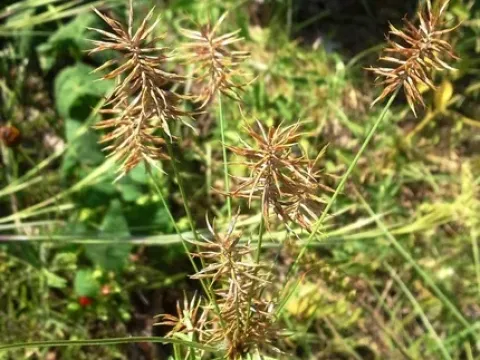
Cyperus floribundus
Cyperus floribundus
Cyperus floribundus is a perennial herb belonging to the Cyperaceae family. In agricultural settings, it is primarily propagated through vegetative means, specifically the division of rhizomes, which allows for the rapid establishment of a uniform crop stand.
What the section contains
Cyperus floribundus
Planting typically occurs in the spring once soil temperatures reach 12–15 degrees Celsius. The ideal window is late April or early May, ensuring the ground has fully thawed and the risk of late frosts is minimal to protect the newly forming shoots.
When seed propagation is required, sowing is performed in specialized, moisture-retaining seedbeds. Due to inherently low germination rates, seeds often require stratification or chemical stimulation to achieve successful emergence.
The planting pattern varies by objective; for bio-filtration or bank stabilization, a dense grid of 30–40 cm spacing is common. Rhizomes should be buried at a shallow depth of 5–7 cm to promote swift root development without burying the growth points.
The plant demonstrates vigorous growth and can become invasive. Therefore, farmers must implement physical barriers or boundary management techniques to prevent the plant from encroaching upon surrounding field crops or irrigation infrastructure.
This species is highly demanding in terms of water availability, thriving in wetland, swampy, or shoreline conditions. Constant soil moisture is critical, as the plant acts as a hydrophyte with high water-use efficiency in saturated environments.
The ideal substrate consists of silty, peaty, or clay-based soils with an acidic to neutral pH. Sandy or well-drained upland soils are unsuitable, as they lead to stunted growth and minimal biomass accumulation during the growing season.
Optimal light exposure is essential for high yields. While the plant can tolerate partial shade, full sun promotes the most robust stem development and greater structural integrity of the harvested foliage.
The plant possesses moderate temperature tolerance but is vulnerable to deep soil freezing. In colder regions, a thick layer of organic mulch or snow cover is required to protect the rhizome mass from winter kill.
For intensive cultivation, supplemental nitrogen fertilization is beneficial. Applying organic fertilizers near the root zone during the peak growth months of June and July significantly enhances the final volume of biomass produced.
The yield of Cyperus floribundus is quantified by the total volume of green biomass harvested. In ideal wetland conditions, farmers can expect one to two harvests per season, depending on the length of the growing period.
In modern agricultural practice, this plant is primarily valued for its role in bio-remediation. Its root system is exceptionally effective at absorbing excess nitrogen and phosphorus, making it a valuable tool for treating agricultural runoff.
The harvested biomass serves as a high-quality ingredient for composting. Because the plant tissue is rich in accumulated micronutrients, it decomposes rapidly when properly mixed with carbon-rich materials, producing a nutrient-dense compost.
There is also potential for using the biomass as a bedding material for livestock or, when properly processed and shredded, as a supplemental feed source for poultry, contributing to waste reduction on the farm.
Beyond agricultural use, the harvesting of rhizomes can provide a raw material for specific industrial applications, such as the production of traditional woven goods or biodegradable packaging materials.
Cyperus floribundus is naturally resistant to many common agricultural pests, thanks to the presence of secondary metabolites and phenolic compounds in its leaves that act as natural insect deterrents.
The primary threats to the crop are fungal pathogens, specifically those that thrive in stagnant water. Conditions like high humidity combined with poor airflow can lead to grey mold or stem rot, which can significantly damage the stand.
Invertebrate pests such as snails and slugs can cause minor damage to young shoots during the spring. This is usually managed through simple exclusion zones rather than large-scale chemical applications.
The plant is generally immune to common aphid infestations. However, maintaining proper planting density is essential to prevent the accumulation of moisture on the foliage, which is a major precursor to disease outbreaks.
To ensure long-term health, growers should practice crop monitoring and remove any dead or infected plant tissue immediately to prevent the spread of fungal spores across the field.
The harvest should be conducted during the peak of the flowering phase, as this is when the nutrient concentration in the stalks is at its maximum. Timely harvesting prevents the loss of quality associated with senescence.
For harvesting, sharp hand tools or specialized underwater mowers are used. It is vital to perform the cut at an appropriate height above the water or soil surface to avoid damaging the rhizome, ensuring the plant can regenerate for the next season.
Once harvested, the material should undergo a drying phase if it is intended for composting. This reduces its weight and moisture content, making transport and further processing significantly more efficient.
Rhizomes intended for propagation or sale are best harvested in late autumn, once the plant has entered dormancy. These should be stored in cool, moist, and well-ventilated conditions to maintain their viability until the following spring.
Proper field maintenance after the harvest involves clearing away excess stubble that may harbor fungal spores, ensuring a clean start for the next growth cycle and sustaining the overall productivity of the plot.