
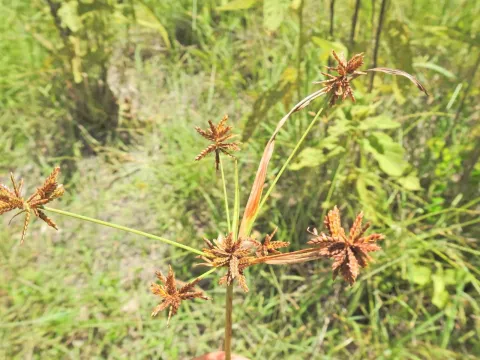
Cyperus fulvus
Cyperus fulvus
Cyperus fulvus is a perennial herbaceous plant belonging to the Cyperaceae family. It is typically found in tropical and subtropical climates, where it thrives in diverse wetland environments and moist soil conditions.
What the section contains
Cyperus fulvus
The plant demonstrates significant resilience to high water levels and periodic flooding, making it well-adapted to swampy terrains and riparian habitats. Its root system is highly efficient at establishing a presence in waterlogged soils.
Sunlight is a critical factor for the healthy development of this sedge. Exposure to direct sunlight ensures robust stem formation and high biomass production, whereas shade tends to weaken the plant's structural integrity.
In terms of soil, Cyperus fulvus prefers loamy soils with a balanced nutrient content. It is capable of adapting to varying pH levels, ranging from slightly acidic to neutral, which allows it to colonize diverse landscapes.
The plant is biologically characterized by its distinct reddish-brown inflorescences and slender, upright stalks. These features serve as important visual identifiers for the species within the large Cyperus genus.
While not a primary staple crop, Cyperus fulvus has specific applications in land management and sustainable agriculture. It is often utilized for soil stabilization and controlling erosion in moist environments.
The biomass of this sedge can serve as a supplementary fodder source, provided it is harvested before the stems become overly lignified. Its nutritional profile makes it a viable choice for cattle grazing in specific ecological contexts.
Yield capacity is highly dependent on the availability of moisture and local temperature gradients. In suitable environments, the plant exhibits vigorous growth cycles, allowing for multiple harvests annually.
Agricultural management of this crop involves monitoring soil nutrient levels and ensuring that the water table remains consistent. Proper nutrient management can significantly increase the total harvestable biomass per hectare.
Future research into this species might focus on its potential for biomass energy production or its role in wetland restoration projects, given its natural efficiency in high-moisture environments.