
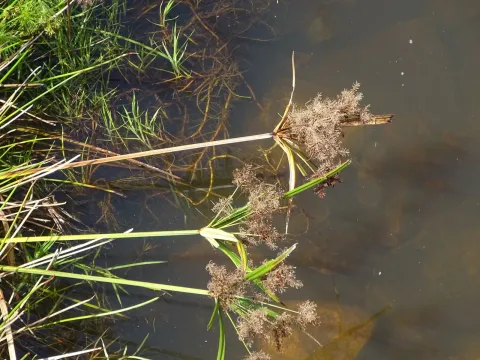
Cyperus dives
Cyperus dives
Cyperus dives is a robust perennial herb belonging to the Cyperaceae family. It is a large helophyte that has evolved to thrive in aquatic and semi-aquatic environments, often forming extensive colonies in marshlands and riverbanks.
What the section contains
Cyperus dives
The native range of this species extends across tropical and subtropical regions of Africa and Asia. It is highly adapted to areas that experience seasonal flooding or permanent saturation, utilizing its deep, vigorous root system to remain anchored in soft, alluvial soils.
Optimal growth requires high ambient temperatures and a consistent water supply. While the plant is notably sun-loving, it possesses the adaptability to thrive in partial shade without compromising its overall biomass production capacity.
Soil preferences lean towards fertile, silty, or peaty substrates that maintain high moisture levels throughout the growing season. The plant performs exceptionally well in neutral to slightly acidic soil conditions, showing resilience to moderate variations in pH levels.
Agricultural management centers on maintaining proper water levels in paddies or dedicated fields. Ensuring the root zone remains waterlogged encourages the rapid development of stems and leaves, which are the primary economic outputs of this crop.
The primary economic use of Cyperus dives lies in its application as a durable fiber crop. Its long, sturdy stems are harvested for traditional craftsmanship, including the production of mats, baskets, ropes, and various types of household weaving products.
In modern industrial applications, this species is increasingly valued as a sustainable source of cellulose for paper manufacturing and as a raw material for environmentally friendly thermal insulation panels in the construction sector.
Yield efficiency is highly dependent on irrigation management and nutrient availability within the aquatic system. With optimal care, multiple harvests can be achieved annually, making it a highly productive crop for wetland reclamation projects.
Beyond its fiber value, Cyperus dives provides essential ecosystem services by acting as a natural water purifier. It absorbs excess nutrients from agricultural runoff, effectively mitigating water pollution in riparian zones and adjacent farming areas.
The plant also offers significant aesthetic value in landscape architecture, particularly for stabilizing the edges of artificial ponds and creating naturalistic water gardens that support local biodiversity and habitat connectivity.
The main threats to the health of Cyperus dives plantations include fungal diseases that manifest under conditions of stagnant, poorly aerated water. These pathogens can cause root rot or stem blight, leading to significant reductions in plant vitality.
Pest pressures are generally moderate but can include various aphid species or leaf-chewing insects that target younger, more tender vegetation. Early detection and targeted biological interventions are often sufficient to manage these populations effectively.
Disease prevention strategies prioritize maintaining water flow to prevent stagnation and ensuring appropriate plant density. Removing debris after harvest is crucial to eliminate overwintering sites for potential pathogens and insect pests.
While mature colonies of Cyperus dives are highly competitive and naturally suppress weeds, initial planting phases require careful weed management. Once established, the dense canopy effectively limits light for competing flora, minimizing the need for herbicides.
Integrating biological controls and promoting healthy aquatic soil conditions are the cornerstones of successful cultivation. These practices minimize the need for synthetic chemical inputs, ensuring the sustainability and environmental safety of the crop production.