
Cyperus cuspidatus
Cyperus cuspidatus
Cyperus cuspidatus is a species belonging to the Cyperaceae family. It is a perennial or annual sedge primarily found in tropical and subtropical regions across the globe, inhabiting diverse wetland ecosystems.
What the section contains
Cyperus cuspidatus
The plant thrives in moist environments, including riverbanks, wet meadows, and irrigated rice fields. It has demonstrated a strong capacity for colonization in areas where water availability is high and consistent throughout the growing season.
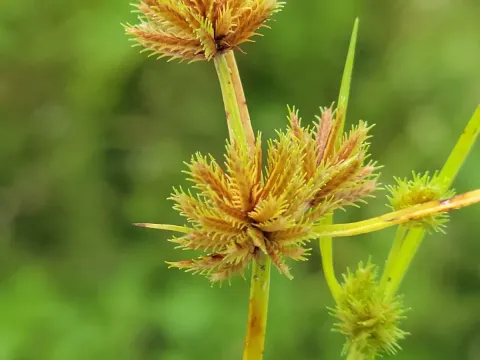
Botanically, it is characterized by its slender stems and distinctive terminal umbel-like inflorescences. The plant's architecture allows it to maximize light capture while maintaining stability in unstable, saturated substrate conditions.
Soil requirements for this species include high organic content or sandy loam textures with significant moisture retention. It is highly sensitive to desiccation, and its physiological processes are strictly dependent on an adequate water supply to maintain cellular turgor.
In agricultural settings, Cyperus cuspidatus acts as an indicator of poor drainage or high water tables. Effective management usually involves water level regulation or physical removal to prevent its encroachment on primary crop rows.
Pathogens affecting this species include various fungal infections that can lead to root rot in stagnant conditions. Herbivorous pests, such as larvae from specific moth species, can also cause significant damage to the floral parts and stems, limiting the plant's reproductive success.