
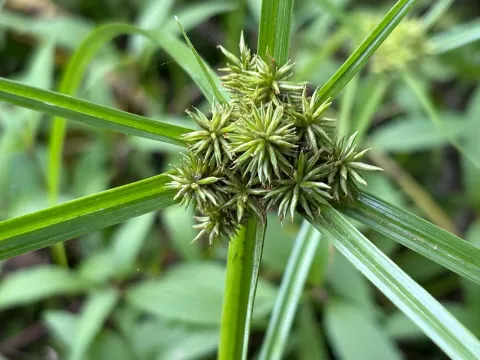
Cyperus cyperoides
Cyperus cyperoides
Cyperus cyperoides is a perennial plant belonging to the Cyperaceae family. While often categorized as a weed in various cropping systems, its botanical characteristics allow it to function as a cover crop or forage source in specific tropical agroecosystems.
What the section contains
Cyperus cyperoides
The sowing season typically aligns with the onset of the rainy season, as the seeds require consistent moisture for successful germination. Optimal soil temperatures for sowing should be maintained between 20 and 25 degrees Celsius to ensure vigorous early establishment.
In a controlled cultivation setting, seeds are sown in rows to facilitate easier management and weed control. The depth of sowing should be shallow, generally not exceeding 2 centimeters, to allow the small seeds to access light and moisture efficiently.
The plant exhibits rapid initial growth after germination, forming a dense root structure. This competitive growth habit allows it to establish dominance in a field relatively quickly, which is beneficial for soil coverage but challenging for crop rotation management.
As a perennial species, it utilizes its underground rhizomes for energy storage during the dormant season. This biological strategy ensures that the plant can survive environmental stresses and regenerate efficiently when conditions become favorable again.
Cyperus cyperoides thrives in environments with high solar radiation and consistent precipitation. It is primarily adapted to tropical and subtropical climates where the growing season is long and relatively warm throughout the year.
Regarding soil preferences, the plant is adaptable but performs best in well-drained, fertile sandy loams. It can tolerate temporarily waterlogged conditions better than many other agricultural crops, making it resilient in flood-prone areas.
The nutrient requirements focus on moderate nitrogen application to support leaf biomass production, though phosphorus and potassium are essential for long-term rhizome health and winter hardiness. Balanced fertilization is recommended for optimal yield.
Light management is crucial, as the plant does not exhibit high shade tolerance. Planting densities must be carefully calculated to ensure that all individuals receive sufficient sunlight, which is necessary for photosynthesis and nutrient accumulation.
Proper field maintenance includes keeping the soil structure loose. Excessive compaction can hinder the development of the root system and reduce the overall vigor of the crop, negatively impacting the final harvest results.
Common threats include various fungal pathogens such as rusts and leaf spots, which thrive in high-humidity environments. These diseases can lead to tissue necrosis and significantly reduce the photosynthetic capacity of the plant canopy.
Pests, particularly sap-sucking insects like aphids and mites, are primary concerns for young shoots. They can cause stunted growth and serve as vectors for secondary viral infections, necessitating integrated pest management approaches.
Root zone pathogens represent another risk, especially in poorly drained soils. The development of root rot can cause sudden wilting and total loss of the crop stand, highlighting the importance of maintaining proper drainage systems.
Weed competition during the seedling stage is critical. Even though Cyperus cyperoides is a strong competitor once established, young plants are vulnerable and require a clean field to reach their full growth potential without resource stress.
- Use certified disease-free seeds.
- Ensure proper field drainage to prevent root issues.
- Implement regular scouting for pest populations.