
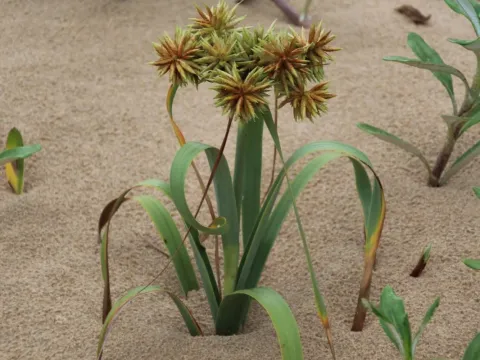
Cyperus crassipes
Cyperus crassipes
Cyperus crassipes is a perennial herbaceous plant belonging to the Cyperaceae family. It is distinct for its adaptation to wetland ecosystems, thriving in environments where water availability is abundant throughout the growing season.
What the section contains
Cyperus crassipes
The botanical profile of the plant includes specialized rhizomatous structures that store nutrients, enabling the plant to survive in periodically flooded soils. Its structural integrity is maintained by robust stems, which allows it to compete with other dense vegetation in marshy habitats.
Climatic requirements are strictly tied to heat-intensive regions. As a thermophilic species, it thrives in warm climates where temperatures remain consistently high. It lacks cold tolerance, making it unsuitable for cultivation in regions with harsh winter conditions.
Soil management for this crop focuses on maintaining high organic matter and constant moisture levels. Ideal soil types are heavy, nutrient-rich clays or peats that can retain water, preventing the root zone from dehydrating, which is essential for biomass production.
Agricultural practice for Cyperus crassipes involves meticulous water management. Ensuring that the soil remains saturated without inducing stagnant anaerobic conditions is key to maximizing plant vigor and overall yield potential for various utility purposes.