
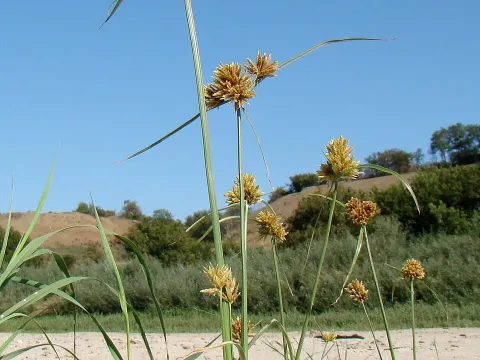
Cyperus conglobatus
Cyperus conglobatus
Cyperus conglobatus is a notable species within the Cyperaceae family, widely distributed in tropical and subtropical regions. This perennial grass-like plant is well-adapted to high-moisture environments, often dominating wetland landscapes and riparian zones where other crops struggle to survive.
What the section contains
Cyperus conglobatus
Morphologically, the plant features robust rhizomes and triangular stems characteristic of the genus. Its leaves are linear and basal, providing a dense growth habit. The inflorescence is distinctively conglobate, consisting of clustered spikelets that emerge from the terminal parts of the flowering stalks.
The primary cultivation requirement is consistent soil saturation. This species thrives in hydric soils that remain damp throughout the growing season. It performs exceptionally well in nutrient-rich silt or alluvial soils, which provide the necessary minerals for its rapid biomass accumulation.
Climate preference is strictly tropical, requiring warm temperatures to maintain active growth. The plant demonstrates high tolerance to heat and intense sunlight, provided that the root zone is protected from dehydration. It is not cold-hardy and will cease development if exposed to prolonged freezing temperatures.
Economic utility includes the harvesting of fibrous stems for traditional weaving and fiber production. Furthermore, the species is increasingly recognized for its ecological service in water purification and soil stabilization. Its ability to absorb nutrients from wastewater makes it a valuable candidate for constructed wetland systems.
The plant is susceptible to various fungal pathogens that thrive in high humidity. Root rot, caused by species of Pythium or Fusarium, is a common threat if the drainage cycle is disrupted or if water remains stagnant for too long without oxygenation.
Pest pressures are generally manageable but include insect species that target the succulent base of the stems. Proper crop rotation or water level management can significantly reduce the risk of infestation, ensuring higher yields and healthy plant stands throughout the cultivation cycle.