
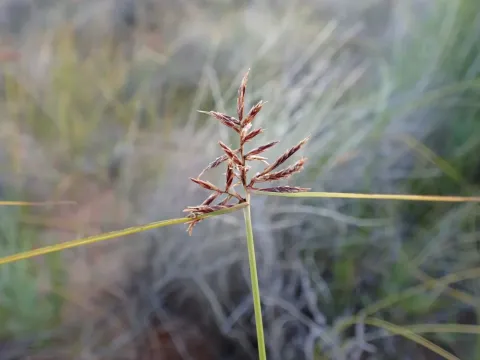
Cyperus bulbosus
Cyperus bulbosus
Cyperus bulbosus is a perennial herbaceous plant belonging to the Cyperaceae family, widely recognized for its tuber-bearing capacity. It is adapted to arid and semi-arid environments, utilizing its underground tubers as a survival strategy against prolonged drought conditions.
What the section contains
Cyperus bulbosus
The primary method of propagation is via the planting of mature tubers. These tubers possess high sprouting potential and are capable of establishing a robust root system quickly after being placed in moist soil conditions, typically following the onset of a rainy season.
Farmers usually sort the tubers by size to ensure uniform emergence. Larger tubers are preferred as they store more energy, providing better initial growth. Spacing is critical, with rows spaced to allow adequate room for the underground development of new tubers.
The ideal planting depth is usually around 5 to 8 centimeters. If planted too shallow, tubers may dehydrate, while planting too deep can delay the emergence of shoots and reduce the overall photosynthetic capacity of the plant during the early growth phase.
Once established, the crop is highly efficient at occupying space. Its fast-growing nature allows it to colonize the designated area rapidly, which helps in suppressing competing weed populations effectively after the first few weeks of growth.
This species thrives in light, well-drained, sandy or loamy soils. These soil types are essential not only for the health of the plant but also for the ease of harvesting the tubers, as heavy or clay-rich soils make extraction labor-intensive and increase the risk of damaging the harvest.
Cyperus bulbosus is highly drought-tolerant, capable of surviving in regions with low annual rainfall. However, to maximize tuber yield, supplemental irrigation during the critical swelling stage of the tubers is highly recommended to ensure optimal size and quality.
Full sun exposure is required for maximum biomass and tuber production. The plant is highly photophilic, and any significant shading from trees or dense neighboring vegetation will negatively impact the plant's ability to store carbohydrates in its underground storage organs.
The soil pH should ideally be within the range of 6.0 to 7.5. The plant is adaptable to various soil chemical profiles but performs best in neutral environments where nutrient availability is balanced and not restricted by extreme acidity or alkalinity.
Maintenance involves periodic soil aeration to keep the ground loose, which encourages the expansion of the tuber network. Excessive use of chemical fertilizers should be avoided in favor of organic amendments that improve soil structure and water-holding capacity.
The primary economic value of Cyperus bulbosus lies in its edible tubers, which are rich in starch, sugars, and minerals. In many regions, they are harvested as a seasonal food source and have significant potential for the production of starch-based food additives.
Harvesting typically occurs when the aerial parts of the plant begin to senescence. At this stage, the tubers have reached their maximum size and nutritional density. Carefully timed harvest ensures that the tubers have sufficient shelf life for storage.
Mechanical harvesting is possible with adapted equipment, such as sieve-type harvesters that separate the tubers from the soil. Manual harvesting is still common in small-scale farming, where the focus is on maximizing the yield of intact, high-quality tubers.
Post-harvest processing requires thorough cleaning to remove adhering soil and debris. Following cleaning, the tubers must be dried under controlled conditions—shaded areas with good air circulation—to reduce moisture content and prevent microbial contamination.
Beyond human consumption, the plant serves as a source of fodder. The leaves and stems can be harvested and dried for use as animal feed, providing a secondary revenue stream for farmers in regions where grazing resources are limited.
The most common disease risks include root and tuber rot, primarily caused by waterlogging or poor soil drainage. Maintaining proper soil moisture levels is the most effective preventative measure against these fungal pathogens.
Soil-dwelling insects, such as wireworms and certain beetle larvae, represent the most significant pest threats. These organisms directly damage the tubers, reducing their market value and increasing the risk of secondary infections by fungi or bacteria.
Weed competition is mainly a concern during the first month after planting. Once the canopy of Cyperus bulbosus closes, it usually outcompetes most weeds, but initial weeding is necessary to prevent early-stage growth inhibition.
Rodents such as voles can be a significant nuisance, as they frequently consume stored carbohydrates in the soil. Protecting the field with simple exclusion methods or managing rodent habitats near the cultivation site is essential for crop protection.
To prevent the buildup of soil-borne diseases and pests, a crop rotation strategy is recommended. Planting Cyperus bulbosus in the same field for multiple consecutive years should be avoided to maintain soil health and long-term productivity.