
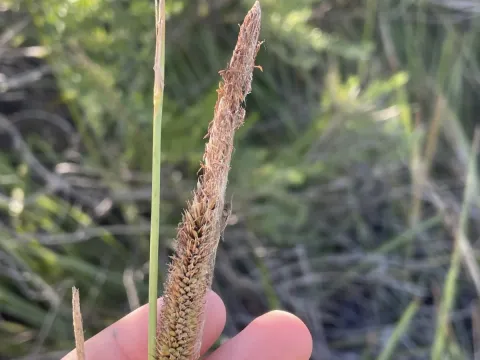
San Diego sedge
Carex spissa
San Diego sedge (Carex spissa) is a robust perennial monocot belonging to the Cyperaceae family. Native to the coastal regions of Southern California and Northern Mexico, it typically inhabits stream banks, canyons, and areas with reliable moisture, forming dense, fountain-like clumps.
What the section contains
San Diego sedge
This species is highly valued for its adaptability to varying soil types, though it thrives best in moisture-retentive, loamy soils. It demonstrates excellent performance in wetland restoration projects and as a stabilizing element for soil erosion control due to its strong, fibrous root system.
Regarding climatic needs, Carex spissa prefers full sun to partial shade. While it is hardy and can withstand occasional dry spells once established, consistent soil moisture is essential for maintaining the vibrant green foliage and the structural density of the plant clusters.
Management practices include basic maintenance such as removing accumulated debris and dead foliage annually. This practice not only improves the aesthetic appearance of the clump but also ensures proper airflow, which is critical for the overall health and vigor of the individual plants.
In landscaping, this sedge is used to add vertical interest to gardens, especially in rain gardens or near water features. Its ability to grow in challenging, wet environments makes it an excellent choice for sustainable and low-input horticultural designs.
The primary threats to the health of Carex spissa are fungal infections, particularly root rot, which may occur if the substrate becomes anaerobic or excessively waterlogged for prolonged periods without oxygen exchange.
Pests are generally not a significant issue for this species; however, stressed plants can become vulnerable to aphids or spider mites, especially in hot and arid environments where the plant's natural defense mechanisms are weakened.
Integrated pest management should focus on cultural controls, such as ensuring correct planting density to promote natural ventilation and preventing excessive nitrogen fertilization that may attract pests.
Monitoring for signs of chlorosis or leaf browning is recommended, as these symptoms can indicate nutrient imbalances, inappropriate pH levels, or localized pest infestation within the inner foliage.
Maintaining the site clean and free of excessive organic mulch around the crown can significantly reduce the risk of pathogen colonization, keeping the plant healthy throughout the growing season.