
Rusty sedge
Carex ferruginea
Rusty sedge (Carex ferruginea) belongs to the Cyperaceae family. It is a perennial grass native to the mountain regions of Central and Southern Europe, specifically flourishing in the limestone meadows of the Alps.
What the section contains
Rusty sedge
The plant thrives in well-drained, calcareous soils. It is well-adapted to cooler mountain climates, exhibiting significant hardiness against frost and strong winds while maintaining its structural integrity throughout the seasons.
Regarding cultivation requirements, Carex ferruginea prefers sites with moderate moisture. While it is not a hydrophytic plant, it requires consistent moisture to ensure that the foliage does not dry out, especially during the peak of summer.
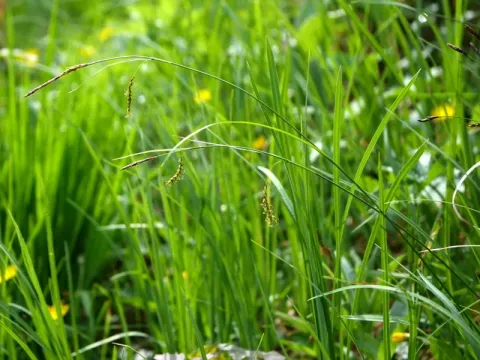
Botanically, this sedge forms dense, compact tufts. Its leaves are narrow and linear, complemented by attractive, reddish-brown inflorescences that provide a rusty appearance, which justifies the common name of the species.
In landscaping, this species is highly valued for rock gardens and borders. It serves as an excellent decorative ground cover, providing texture and color in mountain-inspired garden designs or xeriscapes.
The primary threats to Carex ferruginea are soil-borne pathogens and fungal infections triggered by poor drainage. Over-saturation of the substrate often leads to root rot, which is the most frequent cause of decline in cultivated specimens.
Pest pressures are generally low; however, the plant can be susceptible to aphids or spider mites under drought-stressed conditions. Regular monitoring and proper air circulation within the planting area are essential for keeping the grass healthy and disease-free.