
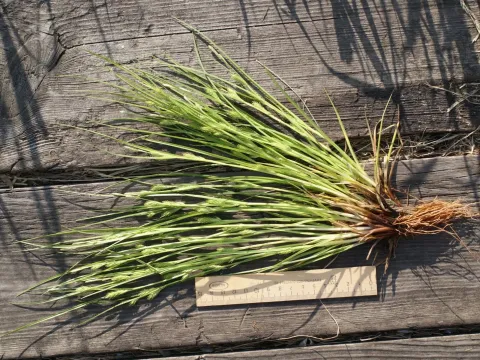
Rye sedge
Carex secalina
Rye sedge (Carex secalina) is a distinctive perennial herb belonging to the Cyperaceae family. Its name reflects the morphological similarity of its inflorescences to those of common rye, making it an interesting subject for botanical study and ecological assessment.
What the section contains
Rye sedge
The plant originates from Central and Southeast European regions, primarily inhabiting floodplains and marshy grasslands. It is highly adapted to fluctuating water levels, which makes it a resilient component of riparian ecosystems where other species might struggle.
When considering soil requirements, this sedge prefers nutrient-rich alluvial substrates with a neutral or slightly alkaline pH. It thrives in soils that maintain high moisture content throughout the growing season, showing excellent tolerance to saturated conditions.
The climate requirements for Carex secalina are centered around temperate zones. It is frost-hardy and can withstand the harsh winter conditions typical of inland Europe, provided it is established in a habitat that prevents deep freezing of the root zone.
Agronomic management involves selecting sites that mimic its natural hydrology. While it is not a traditional grain crop, its potential for biomass production in marginal, water-logged areas makes it a subject of interest for sustainable agricultural land use.
Primary threats to Rye sedge populations include various rust fungi that can flourish in dense stands under humid conditions. These pathogens can significantly reduce the photosynthetic capacity of the plant, leading to decreased vigor and overall biomass yield.
Pest pressure often comes from insect larvae that mine the stems or feed on developing seeds. These pests are frequently found in neglected meadows where the lack of proper management allows insect populations to build up to damaging levels over time.
Effective management includes regular monitoring of leaf health to detect early symptoms of infection. If symptoms appear, cultural practices such as harvesting the biomass can prevent the spread of fungal spores and reduce the intensity of the infestation for the next season.
Competition from invasive plant species is another significant threat. As Rye sedge is a specialized species, it can be easily outcompeted by more aggressive weeds or woody shrubs if the hydrology of the site shifts towards drier conditions.
Furthermore, soil compaction can hinder the expansion of the root system and reduce nutrient uptake. Maintaining the natural soil structure and avoiding heavy machinery in sensitive habitats is essential for ensuring the long-term viability of Rye sedge stands.