
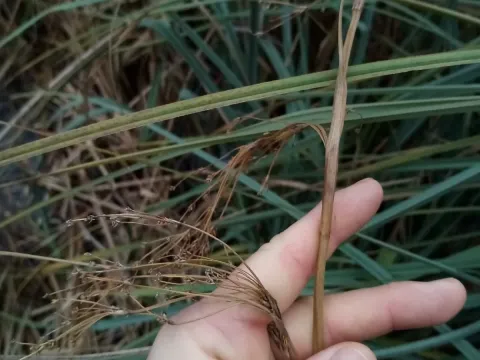
Sawgrass
Cladium
Propagation of Cladium is primarily achieved through division of rhizomes, which is the most reliable method for establishing new colonies.
What the section contains


Sawgrass
Seed germination is generally difficult in artificial conditions due to the strict requirement for high-moisture, cold-stratified seedbeds.
For best results, rhizome segments should be planted in early spring when the water table is high and temperatures begin to rise.
The planting depth should be shallow, roughly 10-15 cm, ensuring that the rhizome is securely anchored in the wet substrate.
Effective establishment requires consistent saturation of the soil to prevent desiccation during the critical initial root development phase.
Sawgrass belongs to the Cyperaceae family and is recognized for its preference for permanently wet, organic-rich, and acidic wetland habitats.
The species requires high water availability and thrives in environments where it remains partially submerged for the majority of the growing season.
Full solar exposure is essential for the plant's metabolic activity, as it lacks competitive strength in shaded environments.
Soil composition must provide stable nutrient levels, typically found in peat-based soils or mud-bottomed aquatic settings.
Climate adaptability is strong within temperate and subtropical zones, though protection from prolonged freezing without snow cover is advisable.
The biomass yield of Cladium is strongly correlated with water nutrient levels and the density of the initial plant population.
In managed wetlands, sawgrass contributes significantly to carbon sequestration and plays a vital role in nitrogen and phosphorus filtration.
Industrially, the fibrous foliage is valued for its durability, finding applications in traditional weaving, thatch production, and ornamental use.
The perennial nature of the root system allows for consistent annual biomass production without the need for frequent replanting.
Harvesting efficiency is maximized when the stand is managed to prevent the encroachment of invasive woody vegetation.
Key pathogens include various fungal species that thrive in the dense, humid conditions found within large sawgrass stands.
Insect pests, specifically specialized moth larvae, can significantly defoliate leaves if local ecosystem balances are disturbed.
Water pollution, particularly the accumulation of agricultural run-off, shifts the ecological balance and leads to the decline of Cladium.
Invasive non-native species often outcompete sawgrass for resources, leading to the fragmentation of established healthy colonies.
Mechanical disturbance of the soil surface due to wildlife or human traffic facilitates the spread of opportunistic weed species.
Harvesting occurs at the end of the growth cycle to ensure the foliage has reached maximum structural maturity and fiber density.
Proper drying techniques are mandatory to maintain the quality of the fibrous material and prevent mold growth in the tightly clustered leaves.
As Cladium is protected in many jurisdictions, all harvesting must comply with local environmental regulations and sustainability guidelines.
Manual harvesting is the preferred method in sensitive wetland areas to minimize damage to the delicate underlying substrate and ecosystem.
Maintenance pruning of dead or diseased foliage during the dormant season assists in managing the health and vigor of the entire colony.