
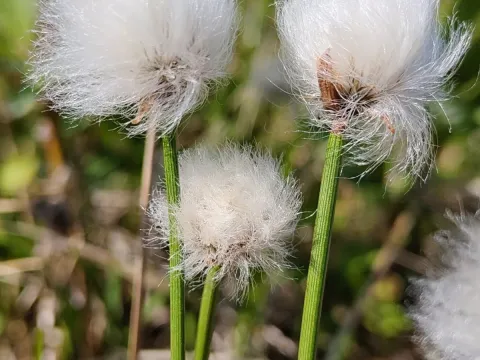
Scheuchzer's cottongrass
Eriophorum scheuchzeri
Scheuchzer's cottongrass (Eriophorum scheuchzeri) is a perennial herbaceous plant belonging to the Cyperaceae family. It is native to arctic and alpine regions, showing remarkable resilience in extreme Northern climates.
What the section contains
Scheuchzer's cottongrass
The plant thrives in saturated soil conditions, typically inhabiting bogs, marshes, and the margins of arctic ponds. It is specifically adapted to cold, acidic, and peat-rich soils that remain perpetually wet.
When cultivating this species, it is essential to mimic its natural wetland environment. Providing a consistent moisture level is the most critical requirement for long-term health and development.
Botanically, the plant is characterized by its creeping rhizomes and distinct white, cotton-like seed heads. These inflorescences are visually striking and represent the defining aesthetic feature of the species.
Light requirements are high, as the plant is an obligate sun-loving species. It requires full exposure to sunlight throughout the day to support the vigorous growth of its unique, fluffy flowers.
In agricultural and landscaping contexts, Scheuchzer's cottongrass is primarily valued as an ornamental plant for water gardens. It is rarely utilized for industrial fiber production due to its specialized habitat.
Harvesting for dried floral arrangements involves cutting the stems once the seed heads are fully fluffed and white. This ensures the best structural integrity and appearance for long-term preservation.
Once harvested, the stems should be air-dried in a shaded, ventilated area to maintain their natural color. Avoid direct sunlight during the drying process to prevent yellowing of the cottony fibers.
Propagation is most successfully achieved through the division of rhizomes. This is best performed in early spring as the plant emerges from dormancy, ensuring that each division has adequate root mass.
Because of its creeping growth habit, it is recommended to manage the plants in contained zones if grown in smaller ornamental ponds. This prevents the species from overcrowding other sensitive aquatic plants.
This species is naturally hardy and typically experiences few health issues in its native environment. However, when grown in warmer climates, it can be susceptible to root rot if water circulation is insufficient.
Occasional infestations of aphids may occur during dry spells or late summer. These should be managed with mild horticultural soaps to protect the delicate structures of the seed heads.
The most significant threat to the survival of cultivated populations is desiccation. If the soil or substrate dries out, the plant will rapidly decline and lose its decorative appeal.
Competition from invasive or fast-growing aquatic weeds can smother young plants. Regular maintenance to keep the area clear of competing vegetation is vital during the establishment phase.
Monitoring for signs of nutrient deficiency or changes in water pH is advisable. While the plant prefers acidic conditions, extreme shifts in chemical balance can lead to foliage chlorosis.