
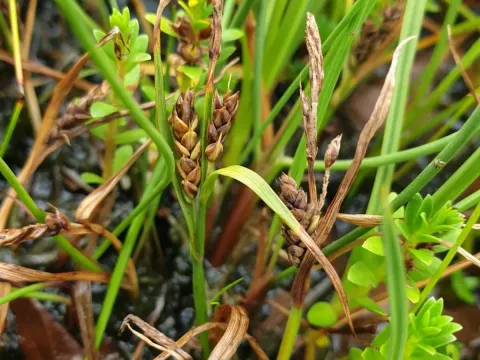
Saltmarsh sedge
Carex salina
Saltmarsh sedge (Carex salina) is a perennial herbaceous plant belonging to the Cyperaceae family. It is a highly specialized halophyte, naturally adapted to thrive in environments with elevated soil salinity, often found in coastal and arctic regions.
What the section contains
Saltmarsh sedge
The geographic distribution of this species spans the northern latitudes, including coastal meadows and lagoons where saline conditions exclude most other grasses. Its ability to tolerate salt stress makes it a key species in these unique habitats.
Botanically, the plant is characterized by a robust rhizomatous root system that forms dense, erosion-resistant sod. The stems are typically triangular, a hallmark feature of the sedge family, supporting narrow, resilient leaves designed to withstand coastal exposure.
Optimal growth occurs in moist, saline sandy or silty soils. The plant requires consistent water availability during the early growth stages to effectively build biomass, despite the high mineral content of the substrate.
The species exhibits remarkable cold tolerance, surviving freezing temperatures and periodic inundation by saltwater tides, making it an essential component for reclamation and stabilization projects in marshy areas.
The primary agricultural use of saltmarsh sedge is as a forage resource for livestock and reindeer grazing. It provides a reliable food source in environments where conventional agricultural crops cannot be cultivated.
Yield potentials are directly linked to environmental factors like soil moisture and the duration of the growing season. While the growth rate is relatively slow, it provides stable biomass throughout the summer months.
Forage quality is moderate but sufficient for maintaining livestock during the short growing seasons of northern regions. Grazing must be carefully managed to ensure the longevity of the root system and to allow for natural regeneration.
Beyond forage, the plant is an excellent candidate for ecological engineering, particularly for coastal protection. Its deep, spreading roots help stabilize shorelines and minimize soil movement caused by wind and water action.
Efficient harvesting or grazing management is critical to prevent site degradation. Ensuring that the rhizome mat remains intact is the best strategy to maintain productivity over multiple seasons.
Like many members of the Cyperaceae, saltmarsh sedge is susceptible to fungal diseases such as leaf rust and various smuts, particularly in regions where humidity is consistently high during the summer.
Insect pests, including various leaf-mining larvae and moth caterpillars, can occasionally feed on the foliage, though these outbreaks are usually sporadic and localized in natural populations.
Overgrazing is the most significant threat to this culture. Excessive pressure on the vegetation quickly leads to the destruction of the root mat, causing soil erosion and long-term depletion of the plant community.
Changes in local hydrology, such as drainage or alteration of tidal influxes, can lead to shifts in soil salinity. If the environment becomes too fresh, the plant may lose its competitive advantage over non-halophytic species.
Good management practices involve monitoring for disease signs during warm periods and ensuring that livestock density is balanced with the natural regenerative capacity of the specific habitat.