
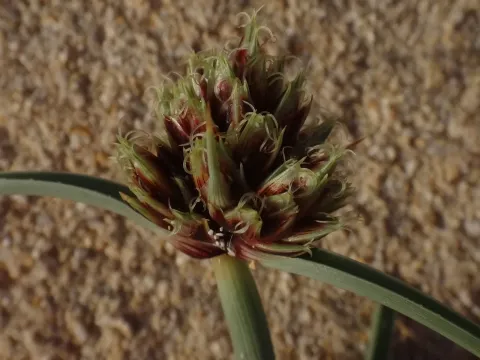
Sand sedge
Cyperus capitatus
Sand sedge (Cyperus capitatus) is a perennial herbaceous plant belonging to the Cyperaceae family. It is well-known for its ability to thrive in extreme coastal environments and sandy habitats.
What the section contains
Sand sedge
Originating from the Mediterranean region and North Africa, this species is naturally adapted to harsh winds and salty air. Its primary role in nature is the stabilization of sand dunes, which prevents soil erosion.
The plant thrives in sandy, well-draining soils. It is notably tolerant of high salinity, making it a valuable candidate for greening coastal areas that are typically challenging for common agricultural crops.
Sunlight is a crucial requirement for the healthy development of this sedge. It requires full sun exposure throughout the growing season to produce vigorous foliage and to develop its characteristic inflorescences.
The climate requirements include warm conditions with access to underground moisture. While it shows resilience during dry spells, its long-term growth is heavily dependent on the depth of the water table in its habitat.
Like many coastal plants, sand sedge is susceptible to various fungal infections when exposed to prolonged dampness. Such infections can lead to leaf rot and reduced vigor of the entire plant cluster.
Root-parasitic nematodes represent a significant pest threat. These pests target the root system, causing nutritional deficiencies and hindering the plant's ability to anchor itself effectively in the substrate.
Insects that feed on reproductive organs can significantly reduce seed yield. Regular scouting during the flowering stage is essential to ensure that the plants are not decimated by pest outbreaks.
Competition from invasive species can quickly overwhelm new plantings. It is essential to maintain clean cultivation zones during the early stages of growth to prevent the crop from being outcompeted.
Poor soil aeration caused by compaction can lead to physiological stress. To keep the plants healthy, it is vital to avoid excessive soil disturbance and maintain optimal levels of soil oxygenation through proper management.