
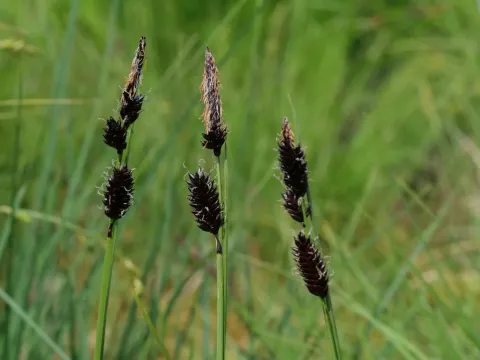
Rocky sedge
Carex saxatilis
The Rocky sedge (Carex saxatilis) is a perennial herbaceous plant belonging to the Cyperaceae family. It is widely recognized for its adaptation to alpine and arctic environments across the Northern Hemisphere.
What the section contains
Rocky sedge
The plant thrives in moist habitats, particularly in boggy meadows, rocky tundra areas, and along the edges of cold mountain streams. It is highly tolerant of acidic soil conditions common in high-latitude regions.
Regarding climate requirements, Carex saxatilis is exceptionally hardy. It is evolved to complete its life cycle during short growing seasons and can survive harsh winter frosts without specific soil protection.
Soil structure should ideally be moist and rich in organic matter. While it can survive on rocky substrates, growth rate is significantly increased when nutrients are readily available in the soil solution.
As a light-demanding species, this sedge does not perform well in shaded conditions. Proper site selection must ensure consistent access to sunlight and moisture throughout the vegetative phase.
From an agricultural standpoint, the Rocky sedge serves as a vital forage resource for native herbivores and livestock in subarctic climates, particularly for reindeer and sheep grazing.
The yield of green biomass depends on local hydrological conditions. Under stable moisture levels, it produces a dense, nutrient-rich sward that is durable enough to withstand seasonal grazing.
Typical yields in naturalized meadows range significantly based on annual temperature fluctuations; however, it remains a reliable source of green matter when other grasses fail due to cold stress.
Beyond animal fodder, the species is valuable for soil stabilization. Its dense root mat prevents erosion in riparian zones and helps maintain the structural integrity of peat-based soils.
Current agricultural interest focuses on its potential for phytoremediation, as the plant can effectively sequester specific minerals in its roots, aiding in land recovery efforts.
Common threats to Carex saxatilis include fungal pathogens such as leaf rusts and smut, which are often exacerbated by excessive humidity and poor air circulation in thick patches.
Pests such as certain moth larvae can infest the culms during the flowering stage, potentially reducing seed production and compromising the health of the individual plant.
Environmental stress, such as prolonged soil compaction from intensive livestock movement, can impede the plant's ability to propagate vegetatively and increase susceptibility to rot.
Invasive species can outcompete the Rocky sedge if the habitat dries out or if soil pH levels fluctuate drastically due to human activity or environmental changes.
Integrated pest management strategies are recommended, focusing on maintaining optimal drainage levels and avoiding overgrazing to ensure the longevity of the plant community.