
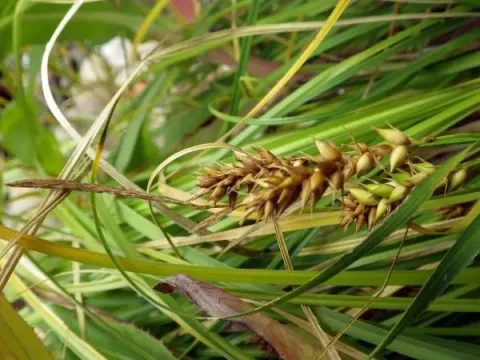
Rough-leaved sedge
Carex scabrifolia
The rough-leaved sedge (Carex scabrifolia) is a perennial herbaceous plant belonging to the Cyperaceae family. It is widely recognized for its ability to thrive in challenging environments, particularly in wetlands and saline meadow habitats where soil conditions would inhibit other crops.
What the section contains
Rough-leaved sedge
One of the most notable features of this species is its high salt tolerance. This makes it an essential plant for the reclamation of saline lands and the stabilization of soil in coastal or basin areas characterized by high mineral content in the soil solution.
Botanically, the plant features distinct scabrous (rough) leaves and a strong, creeping rhizome system. This structure is ideal for soil binding, effectively preventing erosion in riparian zones and flood-prone agricultural areas during heavy rains or seasonal flooding.
Regarding climate, the species shows remarkable resilience to both moisture fluctuation and cold stress. It is well-adapted to temperate regions, where it maintains its vigor through the winter months and begins growth early in the spring season as temperatures rise.
To optimize productivity, it is essential to monitor soil moisture levels. While the plant can handle waterlogged conditions, providing adequate nutrients during the early stages of growth will significantly improve the total biomass yield for agricultural purposes.
Agricultural use of Carex scabrifolia is primarily centered on its role in forage production. As a member of the meadow plant community, it contributes to the overall stability and quality of hay produced in wet pastures and seasonal grasslands.
Harvesting should be carefully timed to balance volume with nutritional quality. Cutting the sedge before it reaches the full seed-setting stage ensures that the foliage remains palatable and nutrient-dense for livestock, as the stems become significantly coarser after flowering.