
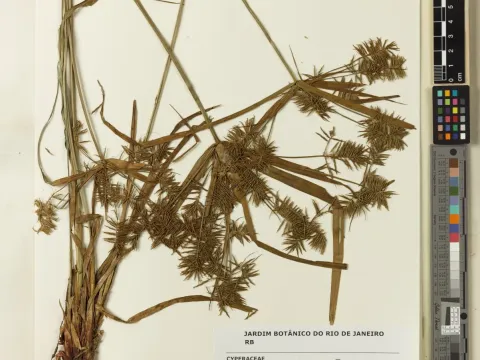
Rigid flatsedge
Cyperus rigens
Rigid flatsedge (Cyperus rigens) is a perennial herbaceous plant belonging to the Cyperaceae family. It is a moisture-loving species that naturally thrives in riparian zones, wetlands, and along the banks of water bodies with consistent water supply.
What the section contains
Rigid flatsedge
Botanically, the plant is characterized by a robust root system, often consisting of short, creeping rhizomes. The stems are erect and rigid, reaching significant heights, which is the primary trait reflected in its common name. The leaves are narrow, linear, and form dense clumps.
Climate requirements for this crop are specific; it prefers warm temperate climates and does not tolerate prolonged soil freezing without snow cover. The optimal temperature range for active growth is between 18 and 25 degrees Celsius.
Soil requirements focus on high moisture levels and adequate organic matter content. The plant performs best on alluvial, heavy clay, or silty soils that retain water well without becoming anaerobic or completely waterlogged for too long.
Agricultural use is generally niche, primarily focused on environmental applications such as riverbank stabilization, erosion control, and biofiltration in agro-ecosystems to improve water quality.
The primary threats to this crop include fungal infections affecting the root zone, especially in conditions where water stagnation coincides with low temperatures. Root rot remains the most significant pathological concern.
Common pests include various insects that feed on the foliage, such as specific butterfly larvae and leaf beetles. In certain environments, small mammals may also cause mechanical damage to the root clumps.
Disease prevention is centered on managing water balance and avoiding excessive soil compaction. Monitoring fertilizer application is crucial, as excess nitrogen can lead to succulent growth that is more susceptible to pathogens.
In cases of severe pest infestation, the use of environmentally safe insecticides is recommended, keeping in mind the plant's proximity to aquatic environments where strict regulations may apply.
Implementing proper cultural practices, such as removing debris and ensuring adequate ventilation between clumps, is essential for maintaining crop health and vigor throughout the growing season.