
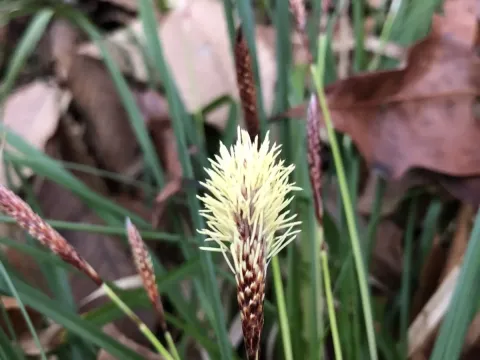
Painted sedge
Carex picta
Painted sedge (Carex picta) is a perennial grass species belonging to the Cyperaceae family. Originating from the temperate regions of East Asia, this plant has gained popularity among landscapers for its unique foliage and resilient growth habit.
What the section contains
Painted sedge
To cultivate Carex picta successfully, it is essential to provide well-drained, nutrient-rich soil. The plant thrives in loamy substrates that retain moisture while allowing excess water to drain away, preventing root asphyxiation.
Climatic preferences include temperate conditions with partial shade. While the species is quite hardy, it shows the best growth performance in protected areas where it is shielded from the scorching midday sun and drying winds.
Maintenance is relatively straightforward: it requires consistent hydration during the growing season. Mulching is highly recommended to regulate soil temperature and retain moisture, which mimics the natural forest floor conditions of its native habitat.
In terms of usage, the painted sedge is valued for its dense clumping habit. It is widely used in landscape design for erosion control on slopes, as a ground cover, or as a decorative accent in shade gardens where other plants might struggle to establish.
The primary threats to Carex picta are fungal pathogens that flourish in stagnant water conditions. Proper site selection and avoiding over-compaction of the soil are the most effective preventive measures against root rot.
Occasionally, leaf-chewing insects can damage the ornamental foliage. Monitoring the plants during late spring and applying biological controls or targeted insecticides, if necessary, will help maintain the aesthetic quality of the sedge throughout the season.