
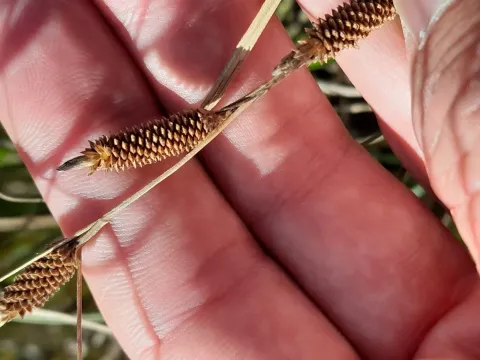
New Zealand hair sedge
Carex dipsacea
Carex dipsacea, commonly known as New Zealand hair sedge, is a perennial plant belonging to the Cyperaceae family. Originating from New Zealand, it is widely recognized for its fine, hair-like foliage that turns a beautiful bronze-copper color throughout the season.
What the section contains
New Zealand hair sedge
The plant thrives in full sun to partial shade. Exposure to sunlight is crucial for maintaining the plant's signature warm, bronze-brown coloration, which makes it a highly desirable species for ornamental grass collections and contemporary garden designs.
Regarding soil requirements, Carex dipsacea performs best in moist, well-drained soils. While it is adaptable to various soil textures, including heavy loams, it is vital to avoid waterlogged conditions, which can be detrimental to the root system during winter months.
In terms of climate, this sedge is moderately hardy. In regions with harsh winters, it is recommended to provide mulch around the base of the plant to insulate the roots. It is not a wetland plant in the traditional sense, preferring consistently damp but not soggy ground.
Agronomic management involves spacing the plants appropriately to ensure adequate airflow, which is essential for the health of the foliage. Regular care includes removing dead or damaged leaves in the early spring to promote vigorous new growth and maintain a tidy appearance.
Carex dipsacea is generally resistant to most pests and diseases. However, in poorly drained or overly humid conditions, it can become susceptible to fungal infections such as leaf spots or crown rot, often caused by stagnant moisture.
Root rot is the most common threat when the plant is kept in waterlogged soil. Ensuring proper soil structure and drainage is the most effective preventative measure against this physiological problem.
In terms of insect pests, aphids or spider mites may occasionally infest the plant during periods of prolonged heat and drought. Regular inspection of the foliage, especially in confined spaces or greenhouse environments, is recommended.
Slugs and snails can be a nuisance for young, tender plants. Applying coarse mulch like grit or gravel around the base can create a natural barrier that helps to deter these mollusks from reaching the foliage.
Integrated pest management and good cultural practices, such as preventing overcrowding and maintaining appropriate watering cycles, remain the best strategies for ensuring the longevity and health of the sedge.