
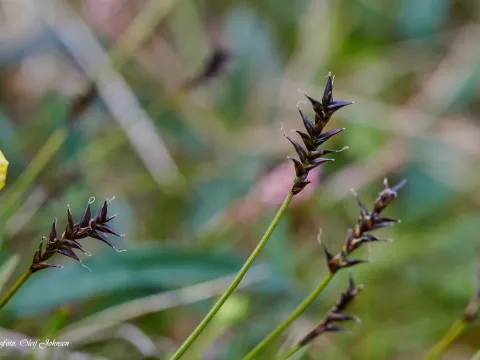
Parallel sedge
Carex parallela
Parallel sedge (Carex parallela) is a perennial herbaceous plant belonging to the Cyperaceae family. It is typically found in Arctic and sub-Arctic regions, displaying remarkable resilience to cold climates and harsh environmental conditions.
What the section contains
Parallel sedge
The plant is distinguished by its creeping rhizomes which allow it to form dense, protective mats in wetlands. Its vegetative morphology includes narrow, upright leaves that are highly efficient in absorbing light in regions with short growing seasons.
This species thrives in specific wetland habitats such as fens, peatlands, and tundra meadows. It requires moist to saturated soil conditions throughout the year to maintain its biological processes and ensure vigorous growth.
Soil requirements focus on high water retention capacities and moderate to acidic pH levels. Carex parallela does not tolerate drought and is highly sensitive to significant drops in the water table, which defines its restricted range of distribution.
From an agricultural management perspective, this sedge is considered a stable ground cover species. It is primarily utilized in environmental engineering for erosion control along water bodies and as part of the diverse forage base in northern grazing lands.
Environmental degradation, particularly drainage and industrial peat extraction, constitutes the primary threat to the stability of Carex parallela populations. Any alteration to the natural hydrology of the landscape severely impacts its viability.
Fungal pathogens, especially rusts (Pucciniaceae), can infect the foliage during humid seasons. These infections, while rarely lethal to the entire plant, can significantly reduce its photosynthetic capacity and biomass yield.
Insect pests, including various larvae of moths and beetles, can cause localized damage to the stems or roots. However, such outbreaks are usually kept in check by natural biological controls within the wetland habitat.
Competition from taller, more aggressive grasses or woody plants, often exacerbated by climate change or human-induced shifts in soil nitrogen levels, poses a significant risk to the persistence of sedge-dominated communities.
Effective management involves consistent monitoring of hydrological conditions and protection of the soil surface from mechanical disturbance. Maintaining natural succession levels is key to preserving the health of the sedge mats.