
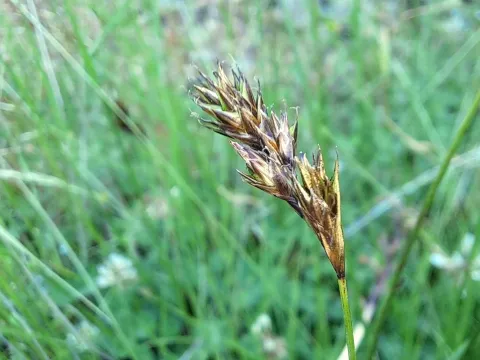
Oval sedge
Carex ovalis
Oval sedge (Carex ovalis) belongs to the Cyperaceae family. It is a perennial herbaceous plant that forms loose tussocks, highly valued for its adaptability to moist growing conditions.
What the section contains
Oval sedge
This species is widely distributed throughout the temperate zones of Eurasia and North America. In the wild, the crop prefers damp meadows, bog edges, pond margins, and wet forest clearings where the soil remains sufficiently moist throughout the growing season.
The plant has specific soil requirements: it favors acidic or slightly acidic loamy and peat-rich soils. Oval sedge possesses high frost resistance, which allows it to successfully overwinter in regions with harsh climatic conditions.
Botanically, the plant is characterized by erect stems reaching 20 to 60 cm in height and distinct oval spike-like inflorescences. The leaves are linear with a grayish-green hue, adding a decorative element to the landscape.
The economic value of the plant lies in its use as a component of natural hayfields and pastures. While the nutritional value of sedge is lower than that of cereal grasses, it serves as an important feed reserve in waterlogged areas unsuitable for other crops.
The main threats to sedge plantings are fungal diseases that develop during prolonged water stagnation in the soil, such as rust and leaf spot.
Among pests, cereal flies and certain species of aphids are commonly found on the crop, damaging the reproductive organs and reducing seed viability.
To prevent the spread of pathogens, it is necessary to maintain proper drainage management, avoiding excessive waterlogging that promotes root system rot.
Timely mowing helps not only to harvest hay but also to sanitize the area by removing affected plant parts before fungal spores can spread.
When using sedge as a forage crop, it is important to monitor the cleanliness of the stand to prevent the infestation of fields by tougher and less valuable weed species of sedge.
Harvesting of oval sedge is conducted during the flowering phase or at the beginning of heading, when the concentration of nutrients in the leaves and stems is at its peak.
The use of modern agricultural machinery allows for efficient mowing even on land with uneven terrain, typical for natural meadows.
Freshly cut biomass has high moisture content, so thorough drying in windrows with periodic turning is essential to ensure high-quality hay production.
It is crucial to avoid over-maturing the stand, as stems quickly become coarse once seeds develop, leading to a significant decrease in palatability and digestibility for livestock.
Post-harvest care involves moderate irrigation or fertilization if the plot is intended for obtaining aftermath, also known as the second cut of the season.