
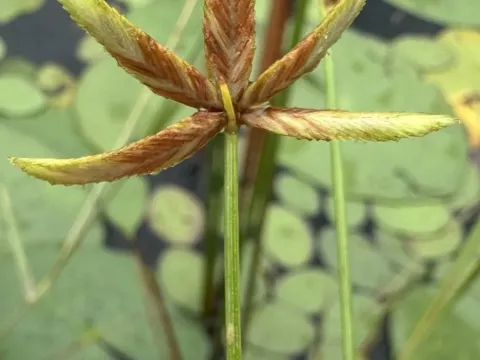
Pectinate flatsedge
Cyperus pectinatus
Pectinate flatsedge (Cyperus pectinatus) is a perennial herbaceous plant belonging to the Cyperaceae family. It is ecologically specialized for life in wetland environments, typically found along the margins of ponds, marshes, and slow-moving water bodies.
What the section contains
Pectinate flatsedge
The plant exhibits typical sedge morphology, featuring triangular stems and a robust system of rhizomes. These rhizomes allow the plant to spread effectively through wet soil and sediment, forming dense stands that stabilize the substrate in riparian zones.
The distribution of this species is largely centered in tropical and subtropical regions. It requires significant warmth and high humidity to complete its life cycle, thriving in environments where moisture is constant throughout the growing season.
Regarding soil and site requirements, Cyperus pectinatus prefers organic-rich substrates, such as alluvial silts and muck. It is well-adapted to anaerobic conditions often found in saturated soils, showing a strong tolerance for waterlogged environments where other vegetation might struggle.
Agrotechnical consideration for this species involves managing water levels to ensure the substrate remains saturated. Given its biological traits, it serves as an excellent candidate for constructed wetlands and phytoremediation projects aimed at improving water quality in agricultural landscapes.