
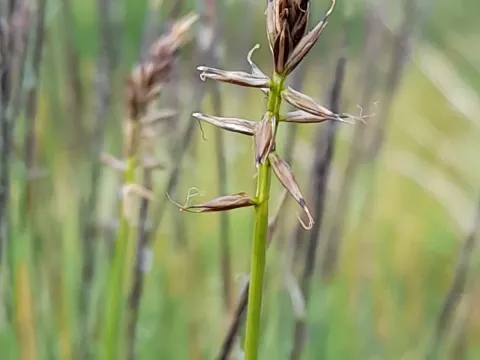
Carex macrostylos
Carex macrostylos
Carex macrostylos is a notable perennial plant belonging to the Cyperaceae family. It is recognized for its robust rhizomatous structure, which enables it to thrive in diverse wetland environments and moist soil conditions.
What the section contains
Carex macrostylos
This species naturally occupies landscapes where moisture levels are consistently high, making it an excellent candidate for ecological restoration projects. It demonstrates a remarkable ability to survive in various temperate climates.
Regarding soil requirements, it favors damp, rich, and slightly acidic to neutral substrates. The plant is highly effective at stabilizing soil profiles, particularly in areas prone to periodic flooding or waterlogging.
Agrotechnical management of Carex macrostylos focuses on maintaining soil moisture levels and ensuring enough space for natural lateral spread via rhizomes. It is relatively low-maintenance once successfully established.
The plant has found significant use in landscape architecture and environmental engineering, serving as a functional tool for managing runoff and protecting shorelines from erosive forces.
While hardy, Carex macrostylos may be susceptible to fungal infections during prolonged periods of high heat and poor drainage. Ensuring good air circulation is essential for maintaining plant health.
Pests that typically affect this species include various sedge-specific insects that graze on foliage. In cases of significant infestation, secondary damage to the vascular system of the plant may occur.
Standard disease control measures involve the removal of affected biomass to prevent the spread of spores. Chemical pesticides are rarely used due to the plant's proximity to aquatic ecosystems.
Effective management includes monitoring for early signs of nutrient deficiency or moisture stress, which can make the plants more susceptible to opportunistic pathogens and insects.
Cultural practices such as clearing debris from the root zone at the end of the season can significantly reduce the overwintering potential of common field pests and pathogens.